Can a cake made from scratch really taste better than a box mix?
I used to think the answer was no. Box mixes are convenient, consistent, and honestly pretty good. But then I tried making white cake from scratch with this recipe and I’m never going back.
This isn’t one of those recipes that requires weird ingredients you’ll never use again or techniques that make you feel like you need a culinary degree. It’s straightforward, uses pantry staples, and creates the fluffiest, most tender white cake you’ve ever had.
The texture is what gets me every single time. It’s soft and light but still has enough structure to hold up under frosting. And the flavor? Pure vanilla goodness without any of that artificial taste you sometimes get from mixes.
I’ve made this cake for birthdays, celebrations, and random Tuesday afternoons when I just wanted something sweet. It works every time.
What You’ll Need
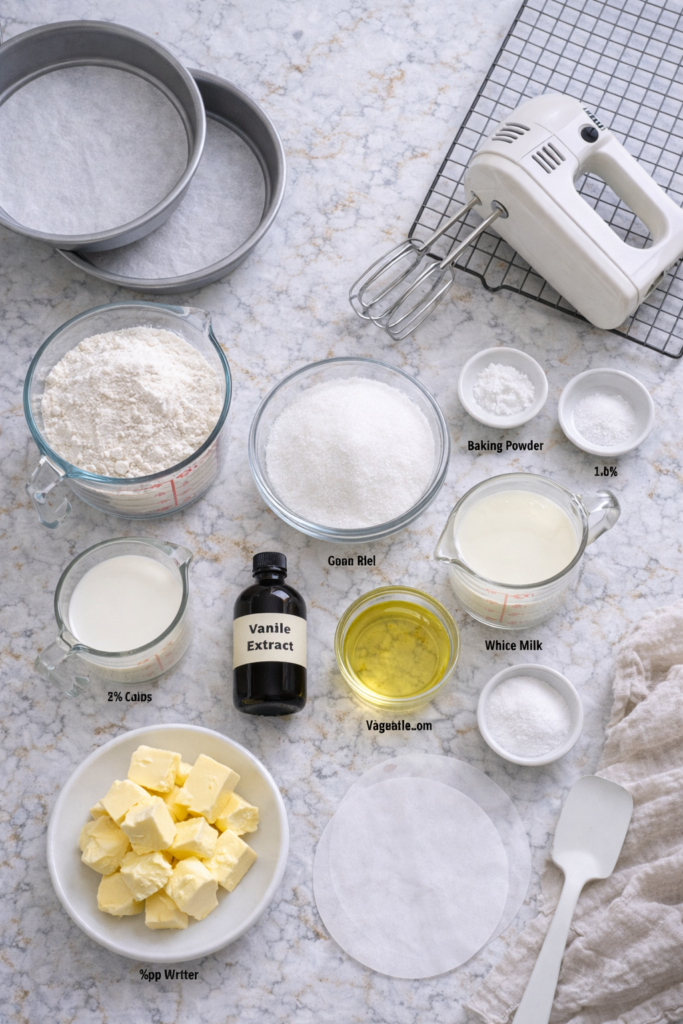
Dry Ingredients:
- 2 ¾ cups (345g) all-purpose flour
- 1 ½ cups (300g) granulated sugar
- 4 teaspoons baking powder
- 1 teaspoon salt
Wet Ingredients:
- 1 cup (240ml) whole milk, room temperature
- ½ cup (120ml) vegetable oil
- 1 tablespoon vanilla extract
- 4 large egg whites, room temperature
- ½ cup (115g) unsalted butter, softened
For the Cake: You’ll also need two 9-inch round cake pans, parchment paper, and cooking spray.
Tools You’ll Need
Having the right tools makes this so much easier:
- Two 9-inch round cake pans
- Electric mixer (stand or hand mixer works)
- Mixing bowls (at least 2)
- Measuring cups and spoons
- Rubber spatula
- Toothpick or cake tester
- Cooling rack
- Parchment paper
I used to skip the parchment paper step but trust me, it’s worth it. Your cakes will slide right out of the pans without any drama.
Pro Tips
1. Room temperature ingredients are non-negotiable
This isn’t me being picky. When your butter, milk, and egg whites are at room temperature, they blend together smoothly and create a better texture. Cold ingredients can cause the batter to curdle or create lumps.
2. Don’t overmix the batter
Mix until everything is just combined. The second you see no more flour streaks, stop. Overmixing develops the gluten in the flour and you’ll end up with a tough, dense cake instead of a light, fluffy one.
3. Use the toothpick test but don’t overbake
A toothpick inserted in the center should come out with just a few moist crumbs. If it comes out completely clean, your cake is probably overbaked. Pull it out when you see those crumbs and let the residual heat finish the job.
4. Level your cakes for better stacking
Use a serrated knife to cut off the domed top of each cake layer. This creates flat surfaces that stack beautifully and won’t slide around when you’re frosting.
5. Frost a completely cool cake
I know waiting is hard but frosting a warm cake will melt your frosting and create a mess. Let the cakes cool in the pans for 10 minutes, then on a wire rack until completely cool.
How to Make White Cake
Step 1: Prep your pans
Preheat your oven to 350°F (175°C). Grease two 9-inch round cake pans with cooking spray or butter, then line the bottoms with parchment paper. Grease the parchment too. This double protection means your cakes will release perfectly every time.
Step 2: Mix the dry ingredients
In a large bowl, whisk together the flour, sugar, baking powder, and salt. Make sure everything is evenly distributed. I usually whisk for about 30 seconds to make sure there are no clumps of baking powder hiding in there.
Step 3: Combine the wet ingredients
In a separate bowl, whisk together the milk, oil, and vanilla extract. Set this aside for now.
Step 4: Beat the butter
Using an electric mixer, beat the softened butter on medium speed for about 2 minutes until it’s creamy and smooth. This aerates the butter and creates a lighter texture in your final cake.
Step 5: Add dry ingredients and milk mixture
With your mixer on low speed, add about a third of the flour mixture to the butter. Mix until just combined. Then add half of the milk mixture. Continue alternating, ending with the flour mixture. Scrape down the sides of the bowl as needed.
The batter will be thick and creamy at this point. That’s exactly what you want.
Step 6: Beat the egg whites
In a clean, dry bowl, beat the egg whites with an electric mixer on medium-high speed until stiff peaks form. This takes about 3-4 minutes. You’ll know they’re ready when you lift the beaters and the peaks stand straight up without drooping.
This step is what makes the cake incredibly light and fluffy. Don’t skip it.
Step 7: Fold in the egg whites
Using a rubber spatula, gently fold one-third of the beaten egg whites into the batter. This lightens the batter and makes it easier to incorporate the rest. Then fold in the remaining egg whites in two additions.
Use a gentle folding motion, scraping from the bottom of the bowl and bringing the batter up and over. You want to maintain as much of that air as possible.
Step 8: Divide and bake
Divide the batter evenly between your two prepared pans. I usually use a kitchen scale to make sure they’re even, but eyeballing it works too. Smooth the tops with a spatula.
Bake for 25-30 minutes. Start checking at 25 minutes. The cakes are done when a toothpick inserted in the center comes out with a few moist crumbs and the tops spring back when lightly pressed.
Step 9: Cool the cakes
Let the cakes cool in the pans for 10 minutes. This resting time helps them set and makes them easier to remove. Then turn them out onto a cooling rack, remove the parchment paper, and let them cool completely.
This cooling step usually takes about an hour. Go do something else. Read a book. Answer emails. Just don’t frost these cakes while they’re still warm 😊
Substitutions and Variations
Oil alternatives: You can replace the vegetable oil with melted coconut oil or canola oil. Both work great. I’ve also used melted butter in place of oil and it makes the cake slightly richer.
Milk options: Any milk works here. Whole milk gives you the richest result, but 2% or even almond milk will work if that’s what you have. Just keep it at room temperature.
Flavor variations:
- Almond cake: Replace half the vanilla with almond extract
- Lemon cake: Add 2 tablespoons of lemon zest and replace 2 tablespoons of milk with fresh lemon juice
- Coconut cake: Add ½ cup of shredded coconut to the batter and use coconut extract instead of vanilla
Sheet cake option: Pour all the batter into a greased 9×13 inch pan and bake for 30-35 minutes. Perfect for when you don’t want to deal with layers.
Make Ahead Tips
This cake actually gets better if you make it a day ahead. The texture becomes even more tender and moist.
To make ahead:
Bake the cake layers as directed and let them cool completely. Wrap each layer tightly in plastic wrap, then again in aluminum foil. Store at room temperature for up to 2 days or freeze for up to 3 months.
If freezing, let the layers thaw in the fridge overnight before frosting. They’ll be perfect.
You can also make the batter ahead and refrigerate it for up to 24 hours. Just bring it back to room temperature before baking and give it a gentle stir.
Leftovers and Storage
Room temperature: Frosted cake keeps well at room temperature for up to 3 days. Just cover it with a cake dome or large bowl to keep it from drying out.
Refrigerator: If your frosting contains dairy (like cream cheese or whipped cream), store the cake in the fridge for up to 5 days. Let it sit at room temperature for about 30 minutes before serving so the cake isn’t cold and dense.
Freezer: Wrap individual slices in plastic wrap, then place them in a freezer bag. They’ll keep for up to 3 months. Thaw at room temperature for about 2 hours.
I actually love eating frozen slices straight from the freezer on hot days. They’re like cake ice cream.
Nutritional Information
Per slice (based on 12 servings):
- Calories: 320
- Fat: 14g
- Carbohydrates: 45g
- Protein: 4g
- Sugar: 26g
- Sodium: 380mg
Keep in mind this is for the cake only. Add your favorite frosting on top and these numbers will change.
Frosting Ideas
This cake is a blank canvas. Here are my favorite pairings:
Classic options:
- Vanilla buttercream (the traditional choice)
- Chocolate buttercream (for contrast)
- Cream cheese frosting (adds tanginess)
- Whipped cream frosting (lighter option)
Fruit flavors:
- Strawberry frosting
- Lemon buttercream
- Raspberry cream cheese frosting
Unique options:
- Salted caramel frosting
- Brown butter frosting
- Cookies and cream frosting
I usually go with vanilla buttercream because it’s what I grew up with, but the chocolate buttercream combo is ridiculously good too.
Meal Pairing Suggestions
White cake is versatile enough for any occasion:
Birthday parties: Pair with vanilla ice cream and fresh berries
Afternoon tea: Serve thin slices with hot tea or coffee
Dinner parties: Add a fruit compote on the side for a more elegant presentation
Casual dessert: Just grab a fork and eat it straight from the fridge at midnight (no judgment here)
FAQ
Why is my cake dense instead of fluffy?
The most common reason is overmixing the batter after adding the flour. Another possibility is that your baking powder is old and has lost its leavening power. Check the expiration date and do the bubble test (add a teaspoon to hot water and see if it fizzes).
Can I make this as cupcakes?
Yes! This recipe makes about 24 cupcakes. Fill the liners about two-thirds full and bake at 350°F for 18-20 minutes.
My egg whites won’t form stiff peaks. What’s wrong?
Make sure your bowl and beaters are completely clean and dry. Even a tiny bit of oil or egg yolk will prevent the whites from whipping properly. Also, egg whites whip better at room temperature.
Can I use this recipe for a three-layer cake?
You’ll need to make 1.5 times the recipe. So multiply all ingredients by 1.5 and divide the batter among three 9-inch pans. Baking time stays about the same.
Why did my cake stick to the pan?
This usually happens when you skip the parchment paper or don’t grease the pan well enough. The double protection method (grease, parchment, grease again) works every time.
Can I make this dairy-free?
Replace the milk with any non-dairy milk and use dairy-free butter or more oil. The texture will be slightly different but still good.
How do I get my layers perfectly even?
Use a kitchen scale to weigh the batter as you divide it between pans. Each pan should have the same weight of batter.
The top of my cake cracked. Did I do something wrong?
Cracking usually means your oven is too hot. Use an oven thermometer to check the actual temperature. Also, don’t overfill the pans – they should be no more than two-thirds full.
Wrapping Up
There’s something really satisfying about making a cake from scratch. Sure, it takes a little more time than opening a box, but the results are so worth it.
This white cake has become my go-to for basically every celebration. It’s reliable, delicious, and people always ask for the recipe. That’s really all you can ask for in a cake recipe.
The best part? Once you make it a few times, you’ll have the process memorized and it becomes almost as easy as using a mix.
Give this recipe a try and let me know how it turns out in the comments below. Did you add any fun flavors? What frosting did you use? I love hearing about people’s baking adventures and any tweaks you made to make it your own.