Look, I know everyone says their cake recipe is the one, but hear me out.
This isn’t some fussy, temperamental recipe that requires you to sacrifice your firstborn to the baking gods. It’s not going to make you sift flour seven times or separate eggs like you’re performing surgery.
This is a cake that actually works. Every. Single. Time.
I’ve made this recipe on rushed Tuesday mornings, late Friday nights when I was half-asleep, and even at 6,000 feet elevation (yes, it still worked). And the crazy part? It tastes like you spent hours in the kitchen when you actually spent maybe 15 minutes doing actual work.
The texture is soft and tender, the crumb is perfect, and it’s just sweet enough without making your teeth hurt. You can dress it up with fancy frosting for birthdays or keep it simple with just a dusting of powdered sugar for your morning coffee.
Ready to meet your new favorite recipe? Let’s get into it.
What You’ll Need
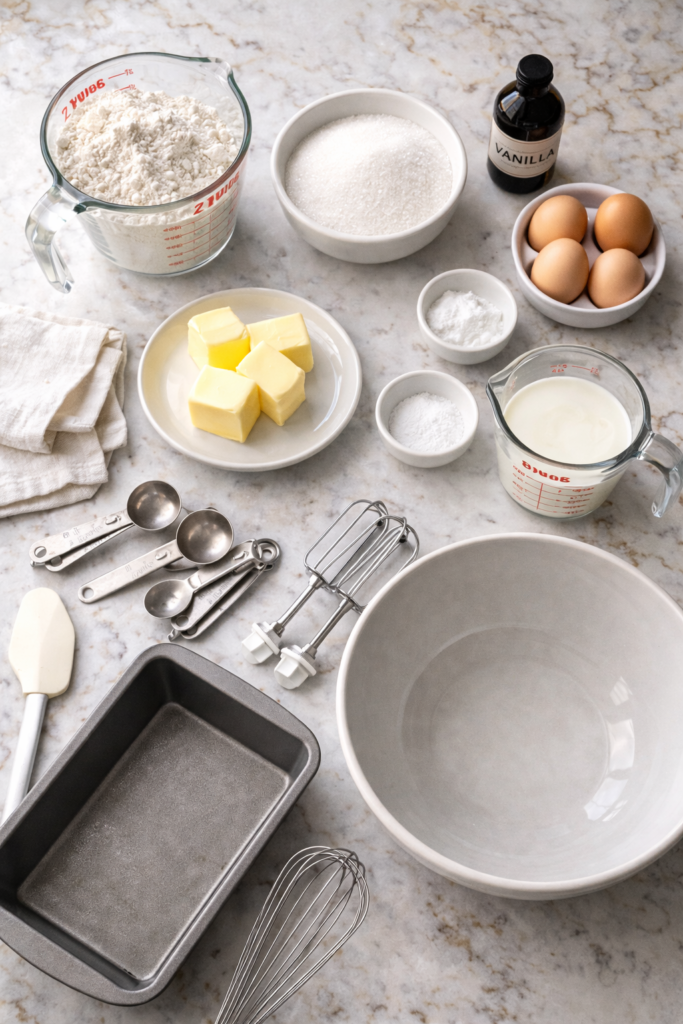
For the Cake:
- 2 cups all-purpose flour
- 1¾ cups granulated sugar
- ¾ cup unsalted butter, softened to room temperature
- 3 large eggs, room temperature
- 1 cup whole milk, room temperature
- 2½ teaspoons baking powder
- 1 teaspoon vanilla extract
- ½ teaspoon salt
For the Frosting (Optional):
- 1 cup unsalted butter, softened
- 4 cups powdered sugar
- 3 tablespoons heavy cream
- 2 teaspoons vanilla extract
- Pinch of salt
Tools You’ll Need
- 9×13 inch baking pan (or two 9-inch round pans)
- Electric mixer (stand or hand mixer)
- Large mixing bowl
- Medium mixing bowl
- Measuring cups and spoons
- Rubber spatula
- Cooling rack
- Parchment paper (optional but helpful)
Pro Tips
Temperature matters more than you think. Room temperature ingredients mix together so much better than cold ones. Your eggs, butter, and milk should all be sitting out for about 30 minutes before you start. If you forgot (we’ve all been there), you can quick-warm eggs by placing them in a bowl of warm water for 5 minutes.
Don’t overmix once you add the flour. This is where people mess up the most. Mix just until you can’t see dry flour anymore, then stop. Overmixing develops gluten, which makes your cake tough instead of tender. 20-30 seconds of mixing is all you need.
The toothpick test isn’t foolproof. A few moist crumbs on the toothpick is actually perfect. If it comes out completely clean, you’ve probably overbaked it. The cake continues cooking for a few minutes after you take it out of the oven, so pull it when it’s almost done.
Let it cool completely before frosting. I know waiting is annoying, but warm cake + frosting = a melted mess sliding off the sides. Give it at least 2 hours to cool, or stick it in the fridge for 30 minutes if you’re impatient.
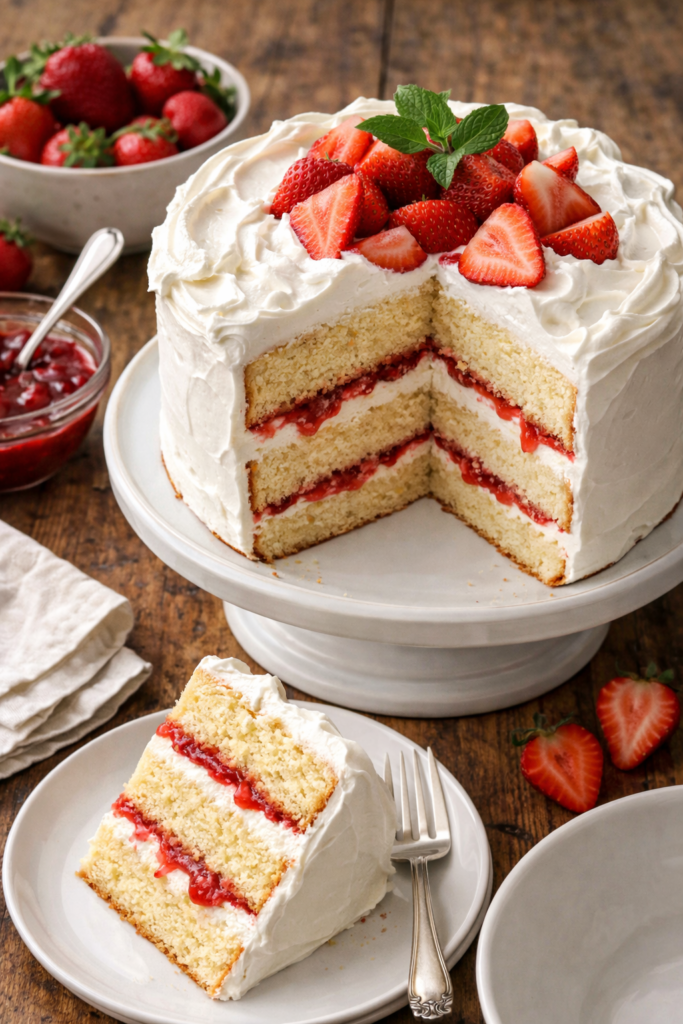
Double the recipe for layer cakes. If you want a tall, impressive layer cake, make this recipe twice. One batch fills two 9-inch rounds perfectly, so two batches gives you a beautiful four-layer cake that looks like it came from a bakery.
How to Make It
Prep your pan and preheat the oven. Set your oven to 350°F. Grease your pan with butter or cooking spray, then line it with parchment paper. This might seem extra, but it makes getting the cake out SO much easier.
Mix the dry ingredients. In a medium bowl, whisk together the flour, baking powder, and salt. Set it aside.
Cream the butter and sugar. In a large bowl, beat the softened butter and sugar together with your electric mixer on medium-high speed for about 3-4 minutes. It should look light and fluffy, almost like frosting. This step adds air to your cake, making it lighter.
Add the eggs one at a time. Beat in each egg, letting it fully incorporate before adding the next one. Scrape down the sides of the bowl with your spatula between additions. Then mix in the vanilla extract.
Alternate adding the flour and milk. Here’s the pattern: add ⅓ of your flour mixture, mix on low just until combined, then add ½ of the milk. Mix. Add another ⅓ of flour, mix, then the remaining milk. Mix. Finally, add the last ⅓ of flour and mix just until you can’t see any dry streaks. Remember, don’t overmix!
Pour and smooth. Pour the batter into your prepared pan and smooth the top with your spatula. Give the pan a gentle tap on the counter to release any air bubbles.
Bake until golden. Bake for 30-35 minutes for a 9×13 pan, or 25-30 minutes for round pans. The top should be golden and spring back when you gently press it. A toothpick inserted in the center should come out with just a few moist crumbs.
Cool completely. Let the cake cool in the pan for 10 minutes, then turn it out onto a cooling rack. Let it cool completely before frosting (this takes about 2 hours at room temperature).
Make the frosting (if using). Beat the softened butter on medium speed until creamy, about 2 minutes. Add the powdered sugar one cup at a time, mixing on low between additions. Add the cream, vanilla, and salt, then beat on high for 3-4 minutes until light and fluffy.
Frost and serve. Spread the frosting over your completely cooled cake. If you’re feeling fancy, you can pipe decorations on top. Cut into squares and enjoy!
Substitutions and Variations
Make it chocolate. Replace ½ cup of flour with ½ cup cocoa powder for a chocolate version. You might need to add 2-3 tablespoons more milk to get the right consistency.
Try different extracts. Swap the vanilla for almond extract (use only ½ teaspoon, it’s strong), lemon extract, or even coconut extract for different flavors.
Use buttermilk instead of milk. This makes the cake extra tender and gives it a slight tang. Just use the same amount (1 cup).
Make it dairy-free. Use plant-based butter and your favorite non-dairy milk. The texture will be slightly different but still delicious.
Add mix-ins. Fold in 1 cup of chocolate chips, fresh berries, or chopped nuts right before baking for extra flavor and texture.
Different pan sizes. This batter works in cupcake tins (makes about 24, bake for 18-20 minutes), a bundt pan (bake for 45-50 minutes), or even a sheet pan for a thinner cake (bake for 20-25 minutes).
Make Ahead Tips
The unfrosted cake actually gets better after a day. The crumb settles and becomes more tender.
You can bake the cake up to 2 days ahead. Let it cool completely, wrap it tightly in plastic wrap, and store it at room temperature. Frost it the day you plan to serve it.
For longer storage, freeze the unfrosted cake for up to 3 months. Wrap it in plastic wrap, then aluminum foil. Thaw it overnight in the fridge before frosting.
The frosting can be made 3 days ahead and stored in an airtight container in the fridge. Let it come to room temperature and give it a quick re-whip before spreading it on your cake.
Leftovers and Storage
Room temperature: A frosted cake will stay fresh for 2-3 days if you cover it with a cake dome or loosely with plastic wrap. Don’t seal it too tightly or the frosting will stick.
Refrigerator: If your kitchen is warm or you used a cream cheese frosting variation, refrigerate the cake. It’ll last 5-7 days. Let slices sit at room temperature for 10 minutes before eating so the cake softens up.
Freezer: Cut unfrosted cake into individual slices, wrap each piece in plastic wrap, and store in a freezer bag for up to 3 months. Thaw at room temperature for about an hour.
Pro tip: Frosted cake freezes beautifully too. Freeze it uncovered for 30 minutes until the frosting is firm, then wrap it well. This prevents the plastic wrap from sticking to the frosting.
Frequently Asked Questions
Can I make this without a mixer?
You can, but it’ll take some arm strength. Use a whisk for creaming the butter and sugar (it’ll take about 8-10 minutes of serious whisking), then switch to a wooden spoon when you add the flour.
Why did my cake sink in the middle?
Usually this means the oven temperature was too high, causing the outside to set before the inside finished baking. Make sure your oven is properly preheated and use an oven thermometer to check the actual temperature.
Can I reduce the sugar?
You can reduce it by up to ¼ cup without major issues, but sugar does more than just sweeten. It keeps the cake moist and tender, so reducing it too much will give you a drier, denser cake.
How do I get flat cake layers instead of domed ones?
Professional bakers use baking strips (wet fabric strips wrapped around the pan) to ensure even baking. You can also lower your oven temperature to 325°F and bake a bit longer.
My frosting is too thick/thin. Help!
Too thick? Add cream one tablespoon at a time until it’s spreadable. Too thin? Add more powdered sugar ¼ cup at a time, or refrigerate it for 15 minutes to firm up.
Can I make this egg-free?
Replace each egg with a “flax egg” (1 tablespoon ground flaxseed mixed with 3 tablespoons water, let sit 5 minutes). The texture will be slightly denser but still good.
What if I only have salted butter?
Use it, but skip the added salt in both the cake and frosting recipes.
How do I know when it’s actually done?
The top should spring back when lightly pressed, the edges should pull away slightly from the pan, and a toothpick should have just a few moist crumbs. Trust your eyes and hands more than the timer.
Wrapping Up
Here’s what I love about this cake: it’s reliable.
You don’t need to be an experienced baker. You don’t need fancy equipment or hard-to-find ingredients. You just need basic pantry staples and about 45 minutes from start to finish (most of that is baking time while you do literally anything else).
I’ve brought this cake to birthday parties, potlucks, and regular weeknight dinners just because I wanted something sweet. I’ve made it for people who claimed they didn’t like cake, and they asked for seconds.
Give it a try this week. Make it plain, frost it, add chocolate chips, whatever sounds good to you. There’s no wrong way to do this.
And when you make it (not if, when), drop a comment below and let me know what you thought. Did you frost it? What flavor did you try? Did your family devour it in one sitting like mine does?
Can’t wait to hear how it turns out for you. 💛