You have eggs. You have whatever’s left in your fridge. And in 30 minutes, you can have something that looks like you spent way more effort than you actually did.
That’s a frittata.
It sounds fancy. It’s Italian. People at brunch restaurants charge $18 for one. But here’s what nobody tells you: it’s one of the easiest things you’ll ever make, and once you nail it, you’ll start wondering why you ever stood over a pan flipping omelettes.
A frittata is basically a crustless egg-based dish that starts on the stovetop and finishes in the oven. Crispy edges, custardy center, and you can fill it with pretty much anything you want. Leftovers? Gone. Sad veggies in the drawer? Gone. Random cheese situation? Perfect.
Stick around, because there’s a trick to getting that perfect golden top that most recipes skip over entirely.
What You’ll Need
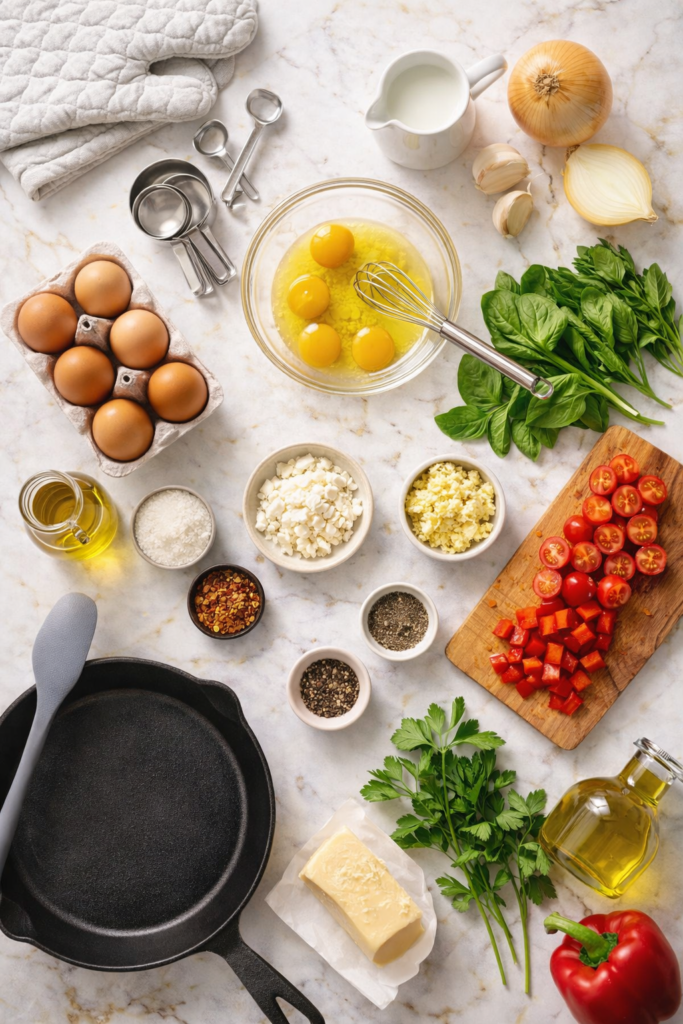
For a Classic Veggie Frittata (serves 4-6)
The Eggs
- 8 large eggs
- ¼ cup whole milk (or heavy cream for extra richness)
- ½ teaspoon salt
- ¼ teaspoon black pepper
The Filling
- 1 tablespoon olive oil
- 1 tablespoon unsalted butter
- 1 small yellow onion, thinly sliced
- 2 cloves garlic, minced
- 1 red bell pepper, diced
- 1 cup baby spinach
- ½ cup cherry tomatoes, halved
- ½ cup crumbled feta cheese (or goat cheese)
- ¼ cup freshly grated parmesan
- 2 tablespoons fresh basil or flat-leaf parsley, roughly chopped
- ¼ teaspoon red pepper flakes (optional)
Tools You’ll Need
- 10-inch oven-safe skillet (cast iron works best, stainless steel works too)
- Mixing bowl
- Whisk
- Spatula or wooden spoon
- Knife and cutting board
- Measuring cups and spoons
- Oven mitts (this is important, that handle gets hot 🔥)
Pro Tips
These are the things that actually matter when you’re making this for the first time.
- Don’t skip the oven-safe skillet. This is non-negotiable. If your pan can’t go in the oven, you’ll struggle to finish cooking the eggs without burning the bottom. Cast iron is ideal because it holds heat beautifully and gives you those gorgeous crispy edges.
- Whisk the eggs until they’re pale yellow and slightly foamy. This adds air and makes the frittata fluffier. You’re not just combining them, you’re actually aerating them. Give it a good 45-60 seconds.
- Don’t overcook your filling before adding the eggs. Your vegetables should be just tender, not mushy. They’ll continue cooking in the oven, so pull back earlier than you think you need to.
- Pull it out of the oven when the center still has a slight jiggle. Not a sloshy jiggle, but a gentle wobble. It firms up as it cools. If you wait until it’s completely set in the oven, it’ll be rubbery by the time you eat it.
- Let it rest for 5 minutes before slicing. This is one of those steps that feels unnecessary but genuinely changes the texture. The eggs need that time to fully set up and the slices will hold together much cleaner.
How to Make It
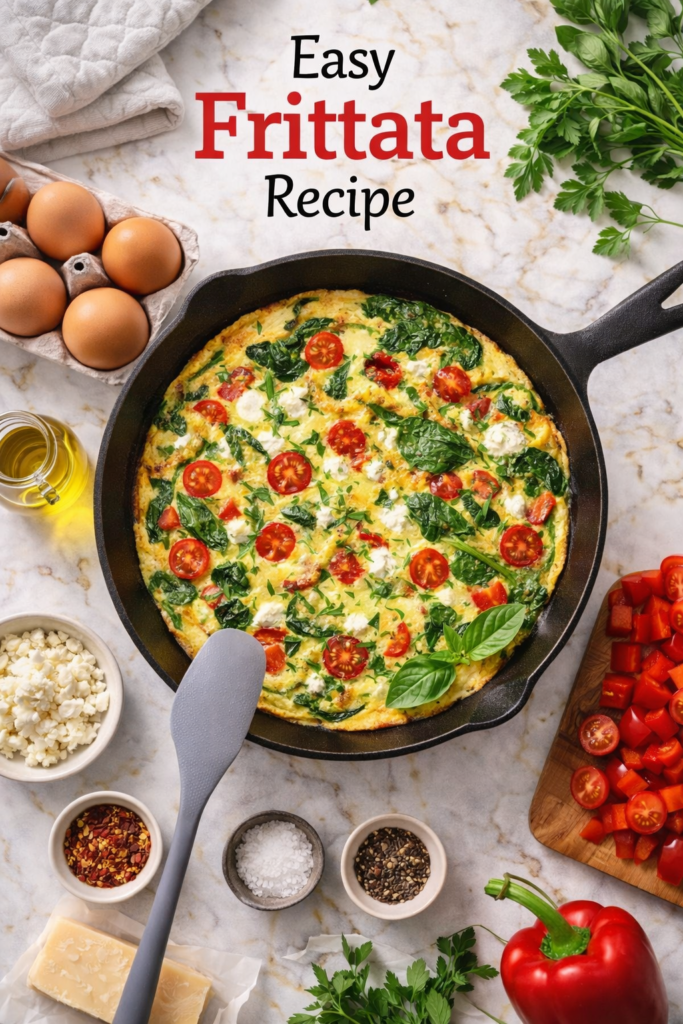
Step 1: Preheat and Prep
Preheat your oven to 400°F (200°C).
While it heats up, crack your eggs into a bowl, add the milk, salt, and pepper, and whisk until pale yellow and slightly foamy. Set aside.
Step 2: Cook Your Vegetables
Heat the olive oil and butter in your oven-safe skillet over medium heat. Once the butter melts and stops foaming, add the sliced onion.
Cook for 4-5 minutes, stirring occasionally, until soft and starting to turn golden at the edges.
Add the garlic and diced bell pepper. Cook for another 2-3 minutes.
Toss in the cherry tomatoes and spinach. Stir until the spinach wilts, about 1-2 minutes. Season lightly with salt and pepper.
Step 3: Add the Eggs
Reduce the heat to medium-low. Pour the egg mixture evenly over the vegetables.
Scatter the feta cheese and red pepper flakes on top. Give the pan a gentle shake to help the eggs settle in around the filling.
Cook on the stovetop for 2-3 minutes, just until the edges start to look set but the center is still very loose.
Step 4: Finish in the Oven
Transfer the skillet to the oven. Bake for 10-12 minutes, until the top is just set and the edges have pulled away slightly from the pan.
For a golden top: switch your oven to broil for the last 1-2 minutes. Watch it closely, it goes from perfect to overdone fast.
Step 5: Rest and Serve
Remove from the oven (don’t forget those mitts), and let it rest for 5 minutes on the stovetop or a trivet.
Sprinkle with fresh basil or parsley and grated parmesan. Slice into wedges directly from the pan and serve warm or at room temperature.
Substitutions and Variations
One of the best things about a frittata is how flexible it is. Here’s how to make it work for different tastes and diets.
| Swap This | For This |
|---|---|
| Feta cheese | Goat cheese, gruyere, cheddar, or mozzarella |
| Spinach | Kale, arugula, or zucchini |
| Bell pepper | Roasted asparagus, sun-dried tomatoes, or artichoke hearts |
| Whole milk | Heavy cream (richer) or plant-based milk (dairy-free) |
| Olive oil + butter | Just olive oil (dairy-free) |
| Fresh herbs | Dried herbs (use half the amount) |
Want to add protein? Cooked bacon, pancetta, crumbled sausage, smoked salmon, or even leftover rotisserie chicken all work great. Just make sure it’s already cooked before it goes in.
Dairy-free? Skip the cheese entirely or use a good dairy-free alternative. Use plant-based milk in the egg mixture. The texture is still great.
Low-carb or keto? This recipe is already low-carb. Just skip the tomatoes if you’re being strict.
Make Ahead Tips
A frittata is genuinely one of the best make-ahead meals out there.
- Prep your filling the night before: Cook the vegetables, let them cool, and store them in an airtight container in the fridge. In the morning, all you have to do is whisk eggs and assemble.
- Bake it fully and refrigerate: The whole frittata keeps well for up to 4 days. You can eat it cold (it’s actually really good that way), or reheat individual slices.
- Freeze it: Slice it into portions, wrap tightly, and freeze for up to 2 months. Thaw overnight in the fridge before reheating.
Nutritional Breakdown
Per serving (based on 6 servings)
| Nutrient | Amount |
|---|---|
| Calories | ~220 kcal |
| Protein | 14g |
| Fat | 16g |
| Carbohydrates | 5g |
| Fiber | 1g |
| Sodium | ~420mg |
Note: Values are approximate and will vary based on specific ingredients and quantities used.
Egg proteins are some of the most bioavailable proteins on the planet. That means your body actually absorbs and uses most of what it’s taking in. For a meal under 250 calories, the protein-to-calorie ratio here is genuinely impressive.
Meal Pairing Suggestions
- A simple green salad with lemon vinaigrette
- Crusty sourdough toast
- Roasted potatoes on the side
- Fresh fruit for a lighter brunch spread
- A glass of dry rosé if you’re doing a weekend brunch right
Leftovers and Storage
Fridge: Store covered or in an airtight container for up to 4 days. Frittata keeps really well and honestly tastes even better the next day once the flavors have had more time to settle.
Freezer: Slice into individual portions, wrap in plastic wrap, place in a freezer bag. Keeps for up to 2 months.
Reheating: Reheat individual slices in a skillet over medium-low heat for 2-3 minutes per side, or in the oven at 325°F for about 10 minutes. Microwaving works in a pinch but can make the eggs a bit rubbery.
One thing to know: Frittata is one of those dishes that’s genuinely great at room temperature. You don’t always have to reheat it. Grab a slice straight from the fridge and it’s still delicious.
FAQ
Can I make a frittata without an oven-safe skillet? You can finish it on the stovetop with a lid, but you’ll miss out on the golden top. The texture will also be slightly less set and a bit more steamed. An oven-safe skillet really does make a difference here.
Why is my frittata rubbery? It was overcooked. This is the most common mistake. Pull it out when the center still has that gentle wobble, and let the residual heat do the rest.
Can I use egg whites only? Yes, but the texture will be less rich and the frittata will be a bit drier. If you want to cut down on yolks, try 6 whole eggs plus 3 egg whites rather than going all-whites.
What’s the difference between a frittata and a quiche? A quiche has a pastry crust and typically a higher ratio of cream, making it richer and more custard-like. A frittata is crustless, lower in fat, and quicker to make. Both are delicious, but a frittata is much more weekday-friendly.
Can I make a larger frittata for a crowd? Scale up to a 12-inch skillet and use 10-12 eggs. You may need to add a few minutes to the oven time. Start checking around the 13-14 minute mark.
Do I have to add milk or cream? It’s not mandatory, but it does make a difference. The liquid loosens the eggs slightly and creates a softer, more custardy texture. Even just 2 tablespoons helps.
Wrapping Up
If you’ve made it this far, you now know everything you need to pull off a frittata that’ll genuinely impress people, including yourself.
It’s quick, it uses what you have, it works for breakfast, lunch, and dinner, and leftovers are something to actually look forward to. That’s a rare combination.
Make it once and you’ll understand why it becomes a weekly rotation staple for so many people. It’s just that reliable.
Give it a go this week and drop a comment below letting me know what you put in yours. Did you go classic with veggies and feta? Did you throw in some leftover bacon? Any questions about the recipe at all, leave them below too, I’d love to help.