You take one bite and your eyes close a little.
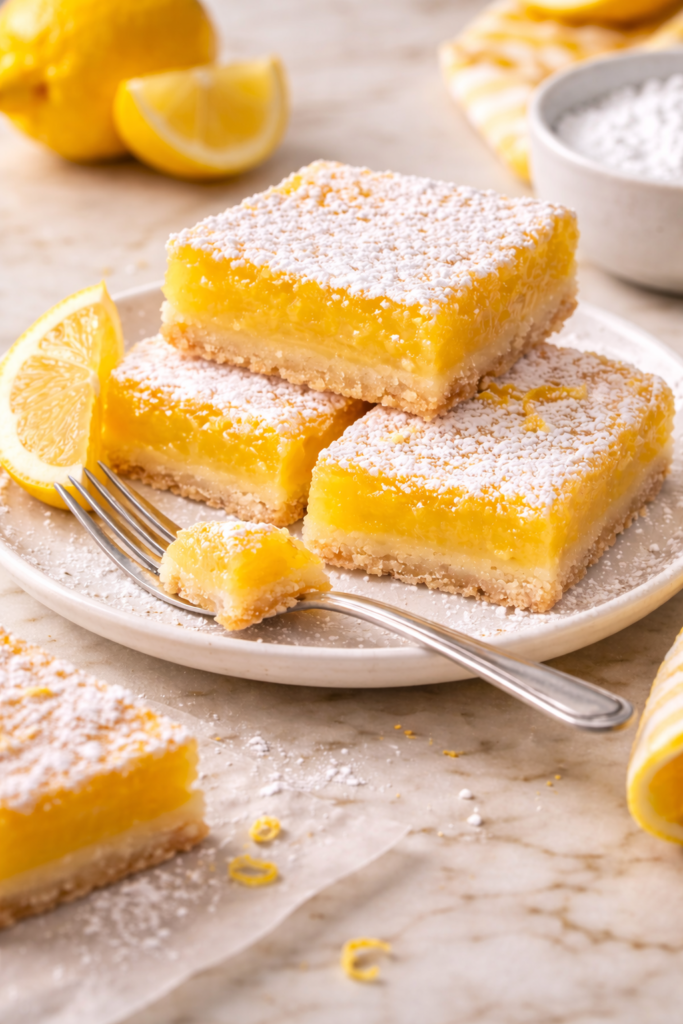
That’s the power of a lemon square done right. A buttery, melt-in-your-mouth shortbread crust with a tart-sweet lemon curd filling that practically glows. Dusted with powdered sugar. Absolutely irresistible.
And here’s the thing most people don’t know: they’re so much easier to make than they look.
No fancy equipment. No complicated techniques. Just simple ingredients that come together in a way that genuinely surprises you every single time. 🍋
What You’ll Need
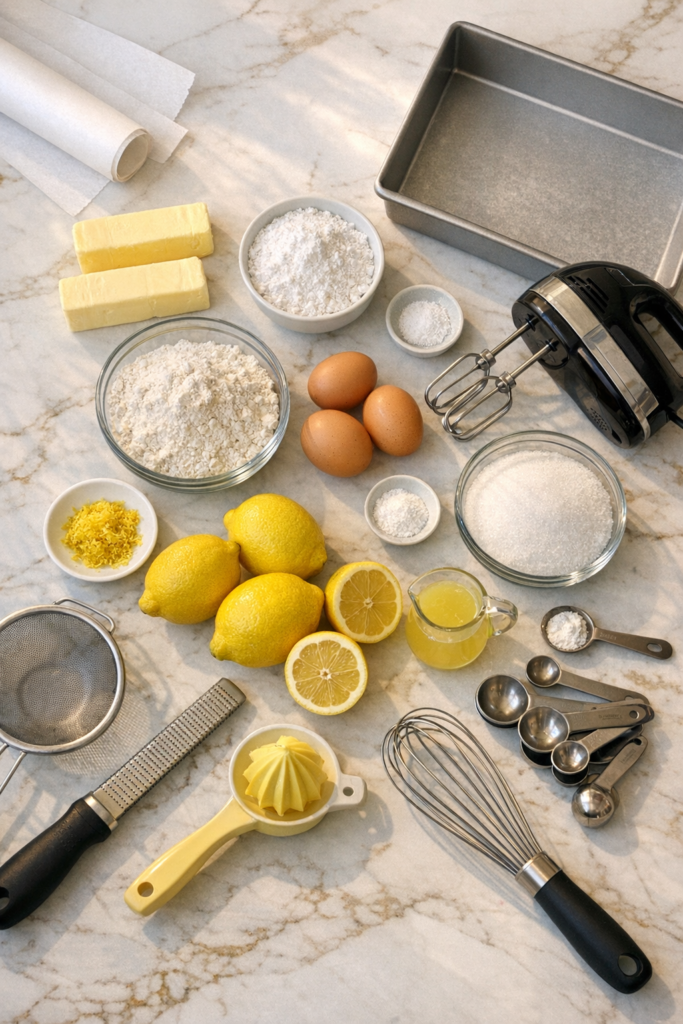
For the Shortbread Crust:
- 1 cup (2 sticks / 225g) unsalted butter, softened to room temperature
- ½ cup (60g) powdered sugar, plus more for dusting
- 2 cups (250g) all-purpose flour
- ¼ teaspoon salt
For the Lemon Filling:
- 4 large eggs, room temperature
- 1½ cups (300g) granulated sugar
- ¼ cup (30g) all-purpose flour
- ½ teaspoon baking powder
- ½ cup (120ml) fresh lemon juice (about 3–4 large lemons)
- 2 tablespoons lemon zest (from about 2 lemons)
- Pinch of salt
Tools You’ll Need
- 9×13 inch baking pan
- Parchment paper
- Hand mixer or stand mixer
- Medium and large mixing bowls
- Citrus juicer or reamer
- Zester or microplane grater
- Whisk
- Fine mesh sieve (for dusting powdered sugar)
- Knife and cutting board
- Measuring cups and spoons
Pro Tips
These are the little things that make the difference between good lemon squares and lemon squares people ask you to make every holiday from now on.
- Use fresh lemon juice only. Bottled juice tastes flat and slightly metallic. Fresh juice has a brightness that you simply cannot replicate. This is non-negotiable.
- Don’t skip the parchment paper overhang. Leave a couple inches of overhang on each side so you can lift the entire batch out cleanly. Trying to cut them in the pan is a recipe for frustration.
- Let the crust cool slightly before adding the filling. If the crust is too hot when you pour the filling in, it can create a weird layer separation. Give it 5 minutes.
- Chill before cutting. Room temperature lemon squares are fine. Chilled lemon squares are perfect. The filling firms up beautifully and you get those clean, bakery-style cuts.
- Dust the powdered sugar right before serving. If you dust and then refrigerate, the sugar absorbs into the filling and disappears. Dust at the last second for that gorgeous snowy top. ✨
Substitutions and Variations
Lemon juice alternatives:
- Lime juice for a lime square twist that’s equally delicious
- Meyer lemon juice for a slightly sweeter, less sharp flavor
- Half lemon, half orange for a citrus blend that’s interesting and crowd-pleasing
Flour swaps:
- Gluten-free 1:1 flour blend works well in both the crust and filling
- Almond flour can be substituted in the crust (use 2 cups) for a nuttier, slightly denser base
Sugar variations:
- Coconut sugar in the filling changes the color but adds a mild caramel-like note
- Reduce granulated sugar to 1¼ cups if you prefer a sharper, more tart filling
Crust add-ins:
- 1 teaspoon vanilla extract in the crust adds warmth
- 1 tablespoon lemon zest in the crust makes the lemon flavor more pronounced throughout
Make Ahead Tips
These are genuinely one of the best make-ahead desserts.
You can bake the entire batch up to 2 days ahead, store covered in the refrigerator, and dust with powdered sugar right before serving. The flavor actually deepens a little overnight, which is a nice bonus.
The shortbread crust dough can also be made ahead and refrigerated for up to 3 days before baking.
How to Make Lemon Squares
Step 1: Prep Your Pan
Preheat your oven to 350°F (175°C).
Line your 9×13 pan with parchment paper, leaving a 2-inch overhang on the long sides. This is your ticket to perfect removal later.
Step 2: Make the Shortbread Crust
In a large bowl, beat the softened butter and powdered sugar together with a hand mixer until light and fluffy. About 2 minutes.
Add the flour and salt. Mix until just combined. The dough will look crumbly but should hold together when pressed.
Press the dough evenly into the bottom of the prepared pan. Use the flat bottom of a measuring cup to smooth it out.
Bake for 18–20 minutes, until the edges are just lightly golden. The center should look set but not browned.
Step 3: Make the Lemon Filling
While the crust bakes, whisk together the eggs and granulated sugar in a large bowl until combined.
Add the flour, baking powder, and salt. Whisk until smooth.
Pour in the fresh lemon juice and add the zest. Whisk everything together until fully incorporated. The filling will be thin and bright yellow.
Step 4: Bake
Pour the lemon filling directly over the warm crust.
Bake for 22–25 minutes, until the filling is set. It should have a very slight jiggle in the very center when you shake the pan gently, but the edges should be fully set.
Remove from the oven and let cool completely in the pan at room temperature. About 1 hour.
Step 5: Chill, Cut, and Dust
Once cooled, transfer the pan to the refrigerator for at least 1 hour (2 hours is better).
Lift the whole slab out using the parchment overhang. Place on a cutting board. Use a sharp knife to cut into squares, wiping the blade clean between cuts.
Dust generously with powdered sugar right before serving.
Nutritional Information (Per Square, Makes 24)
| Nutrient | Amount |
|---|---|
| Calories | ~185 |
| Total Fat | 9g |
| Saturated Fat | 5.5g |
| Carbohydrates | 25g |
| Sugar | 17g |
| Protein | 2.5g |
| Vitamin C | ~8% DV |
Note: Values are approximate and will vary based on exact ingredients used.
Dietary notes:
- Vegetarian ✓
- Nut-free ✓
- Can be made gluten-free with a 1:1 flour swap
Meal pairing ideas:
- Serve alongside afternoon tea or coffee
- A light and refreshing finish after grilled chicken or fish dinners
- Perfect addition to brunch spreads next to fruit and pastries
Leftovers and Storage
Refrigerator: Store in an airtight container, layers separated by parchment paper, for up to 5 days. They taste great cold.
Freezer: These freeze surprisingly well. Arrange in a single layer on a baking sheet, freeze solid (about 2 hours), then transfer to a freezer bag. They keep for up to 3 months. Thaw in the refrigerator overnight.
Important: Always store undressed. Add the powdered sugar after thawing or right before serving, never before storing.
FAQ
Why is my lemon filling not setting up? Two most common reasons: the oven temperature was too low, or the squares were cut before fully chilling. Always chill for a minimum of 1 hour before cutting.
Can I use bottled lemon juice? You can, but the flavor will be noticeably different. Fresh juice has a brightness and complexity that bottled juice lacks. If lemon squares are worth making, they’re worth squeezing a few lemons.
My crust is crumbly and falling apart. What went wrong? The butter was likely too cold. Softened (room temperature) butter is essential for the crust to bind properly. If it crumbles badly when you press it in, try pressing more firmly or adding 1 extra tablespoon of softened butter.
How do I get clean cuts? Three things: chill the squares fully before cutting, use a very sharp knife, and wipe the blade clean with a damp cloth between each cut.
Can I make these in an 8×8 pan? Yes! The squares will be thicker. Increase the baking time for the crust by about 5 minutes and the filling by about 8–10 minutes. Watch for that slight jiggle test.
How do I know when the filling is done? The edges should look fully set and slightly puffed. The very center can have a small, gentle jiggle. It will firm up completely as it cools and chills.
Can I double the lemon zest? Absolutely. If you love a punchy lemon flavor, go for it. Up to 3 tablespoons of zest in the filling is delicious.
Wrapping Up
These lemon squares are the kind of thing you bring to one party and suddenly everyone wants the recipe.
They’re tart without being aggressive, sweet without being cloying, and that shortbread crust is worth every bite on its own. 😍
Make them once and you’ll understand why people keep this recipe on rotation all year. They work for spring brunches, summer potlucks, holiday trays, or just a random Tuesday when you want something that feels a little special.
Now go get those lemons. And when you make them, come back and leave a comment. Tell me how they turned out, what variations you tried, or any questions that came up along the way. I read every single one.