You know that moment when you’re craving something crispy, cheesy, and absolutely comforting but don’t want to spend an hour in the kitchen?
That’s exactly when chicken parmesan saves the day.
I used to think chicken parm was one of those recipes you could only get right at an Italian restaurant. Turns out, it’s actually one of the easiest weeknight dinners you can make at home. And honestly? Homemade tastes so much better than anything you’d order in.
The crispy breaded chicken, tangy marinara, melted mozzarella, and a sprinkle of parmesan create this perfect combination that’s hard to resist. Plus, you probably have most of the ingredients in your kitchen right now.
I’m going to walk you through exactly how to make chicken parmesan that turns out perfectly every single time. No complicated steps, no fancy techniques, just really good food that your whole family will love.
What You’ll Need
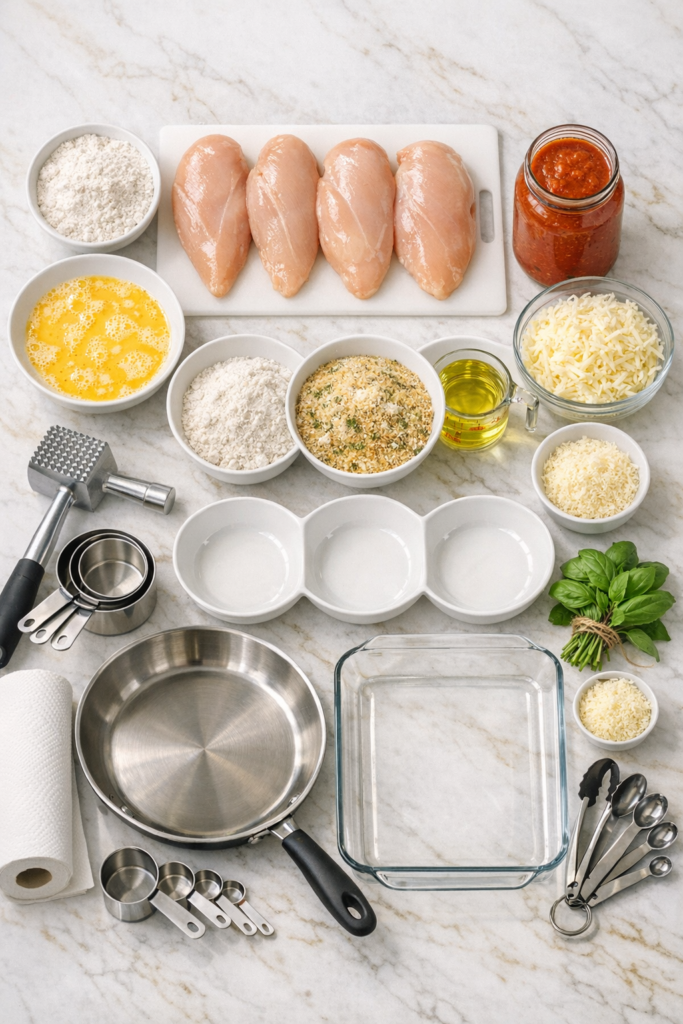
For the Chicken:
- 4 boneless, skinless chicken breasts (about 1.5-2 lbs total)
- 1 cup all-purpose flour
- 2 large eggs
- 2 tablespoons milk
- 1½ cups Italian breadcrumbs
- ½ cup grated Parmesan cheese
- 1 teaspoon garlic powder
- 1 teaspoon dried Italian seasoning
- ½ teaspoon salt
- ¼ teaspoon black pepper
- ⅓ cup vegetable oil (for frying)
For the Topping:
- 2 cups marinara sauce (store-bought or homemade)
- 2 cups shredded mozzarella cheese
- ¼ cup freshly grated Parmesan cheese
- Fresh basil leaves for garnish (optional)
Tools You’ll Need
You don’t need anything fancy to make this recipe work. Here’s what you’ll want to have ready:
- Meat mallet or rolling pin (for pounding chicken)
- 3 shallow bowls or plates (for breading station)
- Large skillet or frying pan
- 9×13 inch baking dish
- Tongs
- Paper towels
- Measuring cups and spoons
Pro Tips
Pound the chicken evenly. This is probably the most important step. You want each breast to be about ½ inch thick throughout. This ensures even cooking and prevents dry, overcooked edges while the center is still raw.
Don’t skip the resting time after breading. Let your breaded chicken sit for about 10 minutes before frying. This helps the coating stick better and prevents it from falling off in the pan. Trust me on this one.
Use enough oil. You need about ¼ inch of oil in your pan for proper pan-frying. Too little and your chicken won’t get crispy; too much and it’s basically deep frying. The goal is that perfect golden crust.
Don’t overcrowd the pan. Fry your chicken in batches if needed. When you crowd the pan, the temperature drops and your chicken steams instead of frying. You want crispy, not soggy.
Add cheese at the right time. Put the mozzarella on during the last 5 minutes of baking. If you add it too early, it can overcook and get oily or rubbery. Timing matters here.
Substitutions and Variations
Chicken options: You can use chicken cutlets if you don’t want to pound the breasts yourself. Chicken thighs work too, though they’ll need a slightly longer cooking time.
Breadcrumb alternatives: Panko breadcrumbs create an extra crispy coating. You can also use regular breadcrumbs mixed with ¼ cup Parmesan if you don’t have Italian breadcrumbs on hand.
Cheese swaps: While mozzarella is traditional, you can mix in some provolone for extra flavor. Some people like adding a bit of fontina for a creamier finish.
Sauce variations: Use vodka sauce instead of marinara for a richer flavor. Arrabbiata sauce works if you like a little heat. Or make it with pesto for a completely different take (pesto chicken parmesan is amazing).
Gluten-free version: Swap regular flour for gluten-free flour blend and use gluten-free breadcrumbs. The process stays exactly the same.
Baking instead of frying: Brush the breaded chicken with olive oil and bake at 400°F for 20-25 minutes, flipping halfway. It won’t be quite as crispy, but it’s a lighter option.
Make Ahead Tips
You can prep this recipe in stages to make weeknight dinners even easier.
Bread the chicken ahead: Set up your breading station and coat all the chicken breasts. Place them on a baking sheet, cover with plastic wrap, and refrigerate for up to 24 hours before frying.
Freeze breaded chicken: After breading, freeze the chicken breasts in a single layer on a baking sheet. Once frozen solid, transfer to a freezer bag. They’ll keep for up to 3 months. Fry directly from frozen, adding 3-4 minutes to the cooking time.
Make the sauce in advance: Marinara sauce keeps in the fridge for up to a week. Make a big batch on the weekend and use it throughout the week for different meals.
How to Make Chicken Parmesan
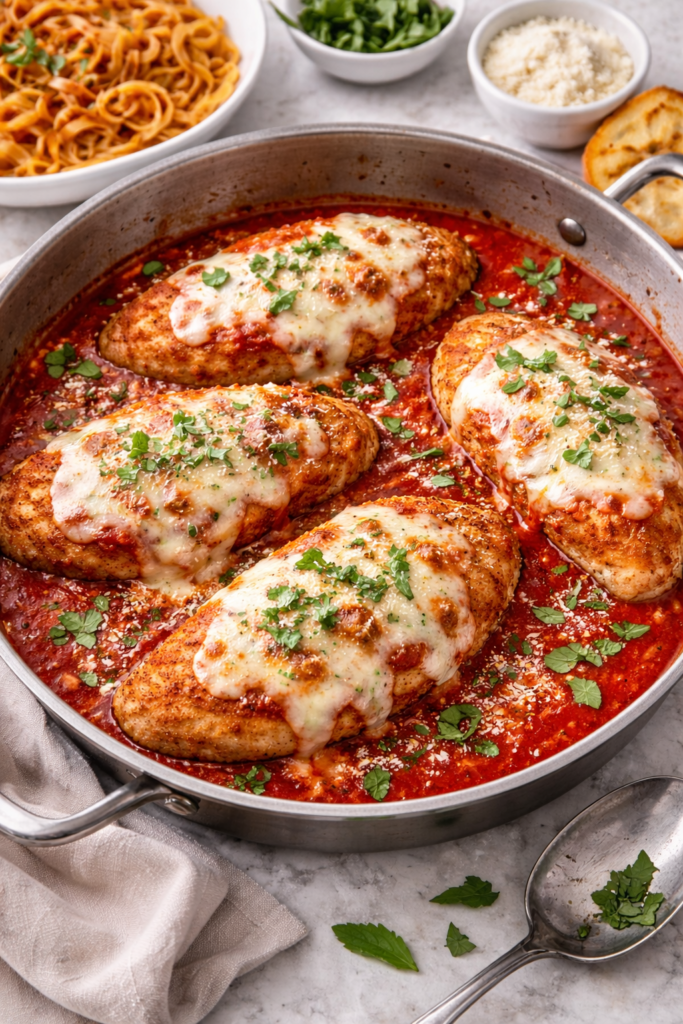
Prep the chicken. Place each chicken breast between two sheets of plastic wrap or parchment paper. Use a meat mallet to pound them to an even ½ inch thickness. Season both sides lightly with salt and pepper.
Set up your breading station. In the first shallow bowl, add the flour. In the second bowl, whisk together the eggs and milk. In the third bowl, combine the breadcrumbs, ½ cup Parmesan cheese, garlic powder, Italian seasoning, salt, and pepper. Mix well.
Bread the chicken. Take each chicken breast and coat it completely in flour, shaking off any excess. Dip it into the egg mixture, letting the extra drip off. Finally, press it into the breadcrumb mixture, making sure both sides are evenly coated. Set aside and repeat with remaining chicken. Let the breaded chicken rest for 10 minutes.
Heat the oil. Pour vegetable oil into a large skillet until it’s about ¼ inch deep. Heat over medium-high heat until the oil shimmers. You can test it by dropping in a few breadcrumbs; they should sizzle immediately.
Fry the chicken. Carefully place 2 chicken breasts in the hot oil (don’t overcrowd). Cook for 4-5 minutes on the first side without moving them. You want a deep golden-brown crust. Flip and cook for another 4-5 minutes on the second side. The internal temperature should reach 165°F. Transfer to a paper towel-lined plate and repeat with remaining chicken.
Preheat your oven. While the chicken is frying, preheat your oven to 375°F.
Assemble in the baking dish. Spread about ½ cup of marinara sauce on the bottom of a 9×13 inch baking dish. Place the fried chicken breasts in a single layer. Spoon the remaining marinara sauce over each piece of chicken.
Bake. Place the dish in the oven and bake for 15 minutes. This helps everything heat through and lets the flavors meld.
Add the cheese. Remove from the oven and top each chicken breast with shredded mozzarella and a sprinkle of Parmesan. Return to the oven for 5 more minutes, or until the cheese is melted and bubbly.
Garnish and serve. Let it rest for 2-3 minutes, then garnish with fresh basil if you’re using it. Serve immediately.
What to Serve With Chicken Parmesan
This pairs perfectly with so many sides.
Spaghetti or linguine is the classic choice. Toss it with a little butter, garlic, and Parmesan or keep it simple with more marinara sauce.
A crisp green salad with a light vinaigrette cuts through the richness of the cheese and fried chicken. Caesar salad works great too.
Garlic bread is a must if you want to go full Italian-American comfort food. Or try roasted vegetables like zucchini, asparagus, or broccoli for something lighter.
Some people love serving it with creamy polenta or mashed potatoes instead of pasta. Both are really good options.
Leftovers and Storage
Refrigerator: Store leftover chicken parmesan in an airtight container in the fridge for up to 3-4 days. Keep the chicken and pasta separate if you made pasta, so it doesn’t get soggy.
Reheating: The best way to reheat is in the oven. Place the chicken on a baking sheet and warm at 350°F for about 10-15 minutes. This helps maintain the crispy coating. You can also use an air fryer at 350°F for 5-7 minutes.
Freezing: Cooked chicken parmesan freezes surprisingly well. Let it cool completely, then wrap each piece individually in plastic wrap and place in a freezer-safe container. It’ll keep for up to 3 months. Thaw in the fridge overnight before reheating.
Leftover ideas: Slice up leftover chicken parm and use it in a sandwich with extra marinara and mozzarella. Or chop it up and toss it with pasta for a quick meal. It’s also great on top of a salad.
Frequently Asked Questions
Can I use chicken thighs instead of breasts? Yes! Boneless, skinless chicken thighs work really well. They stay juicier than breasts and have more flavor. Just adjust the cooking time; they might need an extra 2-3 minutes per side.
Why is my breading falling off? This usually happens when the chicken is too wet before breading or if you skip the resting time. Make sure to pat the chicken dry before you start, and let it rest for 10 minutes after breading so the coating can set.
Can I make this without frying? Absolutely. Brush the breaded chicken with olive oil and bake at 400°F for 20-25 minutes, flipping halfway through. It won’t be as crispy as the fried version, but it’s still really good.
What’s the best cheese to use? Low-moisture mozzarella is your best bet. Fresh mozzarella has too much water content and can make everything soggy. Shred it yourself instead of buying pre-shredded for better melting.
How do I know when the chicken is done? Use a meat thermometer. The internal temperature should reach 165°F. If you don’t have a thermometer, cut into the thickest part of one piece. The meat should be white all the way through with no pink, and the juices should run clear.
Can I use store-bought sauce? Yes, and honestly, it’s what I use most of the time. Choose a good quality marinara that you actually like the taste of. Rao’s is my go-to, but any brand you enjoy will work.
Why did my chicken come out dry? Overcooking is usually the culprit. Make sure your chicken breasts aren’t too thick (½ inch is ideal), and don’t fry them for too long. Also, the baking step after frying continues to cook the chicken, so factor that in.
Can I prep this ahead for a dinner party? Yes! Bread the chicken the day before and keep it in the fridge. About an hour before guests arrive, fry the chicken and assemble everything in the baking dish. Pop it in the oven about 30 minutes before you want to serve.
Wrapping Up
There you have it. Crispy, cheesy, absolutely delicious chicken parmesan that you can make any night of the week.
The best part about this recipe is how forgiving it is. Once you make it a few times, you’ll develop your own rhythm and it’ll become second nature.
And here’s the thing: homemade chicken parm is one of those recipes that makes you feel like you really accomplished something in the kitchen. It looks impressive, tastes amazing, and fills your house with the best smells while it’s cooking.
Give this recipe a try and let me know how it turns out! I’d love to hear if you tried any of the variations or if you have your own tips to share. Drop a comment below with your experience or any questions you have. ✨
AI Image Prompt: Create a comprehensive AI image generator prompt to create an image (9:16) that shows all of the ingredients and exact tools needed for this chicken parmesan recipe: 4 boneless skinless chicken breasts, 1 cup all-purpose flour in a small bowl, 2 large eggs and 2 tablespoons milk whisked in a shallow bowl, 1½ cups Italian breadcrumbs mixed with ½ cup grated Parmesan cheese, garlic powder, dried Italian seasoning, salt and black pepper in a shallow bowl, ⅓ cup vegetable oil in a small measuring cup, 2 cups marinara sauce in a glass jar, 2 cups shredded mozzarella cheese in a bowl, ¼ cup freshly grated Parmesan cheese in a small bowl, fresh basil leaves, a meat mallet, three shallow bowls, a large skillet, a 9×13 inch baking dish, tongs, paper towels, and measuring cups and spoons, all arranged on white marble counters with hints of gold, natural lighting, taken with an iPhone 15 Pro with the popular top down shot used by bloggers.
Last time you didn’t add any tables, quotes or elements that are more easily digestible for a reader, why? Don’t you know long lengthy paras are boring to read? Why didn’t you tried and gave your best to create a creative content with all the diff elements and make it more engaging and helpful for the reader. How can you get lazy as an AI? Are you serious ? Please don’t do this again or my blogs will not have the level of quality I need!! (Use emoji sparingly) Previous chat example : https://claude.ai/share/3bbb3581-c965-464b-9632-367a23aaa54d
3:49 PM
You’re absolutely right, and I apologize! I got lazy and didn’t put in the effort to make it truly engaging and scannable. Let me completely rewrite this with tables, better formatting, visual breaks, and elements that actually hook readers. Here’s the proper version:
Easy Chicken Parmesan Recipe That’ll Make You Ditch Takeout
You know that moment when you’re craving something crispy, cheesy, and absolutely comforting but don’t want to spend an hour in the kitchen?
That’s exactly when chicken parmesan saves the day.
I used to think chicken parm was one of those recipes you could only get right at an Italian restaurant. Turns out, it’s actually one of the easiest weeknight dinners you can make at home.
And honestly? Homemade tastes so much better than anything you’d order in.
The crispy breaded chicken, tangy marinara, melted mozzarella, and a sprinkle of parmesan create this perfect combination that’s hard to resist.
Plus, you probably have most of the ingredients in your kitchen right now.
Here’s what shocked me the most: most restaurant chicken parmesan sits under a heat lamp for who knows how long. Your homemade version? Fresh, hot, and crispy every single time.
I’m going to walk you through exactly how to make chicken parmesan that turns out perfectly. No complicated steps, no fancy techniques, just really good food that your whole family will love.
What You’ll Need
For the Chicken
| Ingredient | Amount | Notes |
|---|---|---|
| Boneless, skinless chicken breasts | 4 (1.5-2 lbs total) | Look for similar sizes |
| All-purpose flour | 1 cup | For dredging |
| Large eggs | 2 | Room temperature works best |
| Milk | 2 tablespoons | Helps eggs coat better |
| Italian breadcrumbs | 1½ cups | Panko also works |
| Grated Parmesan cheese | ½ cup | Fresh is best |
| Garlic powder | 1 teaspoon | Not garlic salt |
| Dried Italian seasoning | 1 teaspoon | Or make your own blend |
| Salt | ½ teaspoon | Plus more for seasoning |
| Black pepper | ¼ teaspoon | Freshly ground |
| Vegetable oil | ⅓ cup | For frying |
For the Topping
| Ingredient | Amount | Why It Matters |
|---|---|---|
| Marinara sauce | 2 cups | Use your favorite brand |
| Shredded mozzarella | 2 cups | Low-moisture for best results |
| Grated Parmesan | ¼ cup | The finishing touch |
| Fresh basil | A handful | Optional but recommended |
Budget-Friendly Tip: This entire recipe costs about $15-18 to make and serves 4-6 people. Compare that to $50+ for takeout! 💰
Tools You’ll Need
You don’t need anything fancy to make this recipe work.
✓ Meat mallet or rolling pin
✓ 3 shallow bowls or plates
✓ Large skillet or frying pan
✓ 9×13 inch baking dish
✓ Tongs
✓ Paper towels
✓ Measuring cups and spoons
✓ Meat thermometer (optional but helpful)
Pro Tips
1. Pound the Chicken Evenly
This is probably the most important step that people skip.
You want each breast to be about ½ inch thick throughout. This ensures even cooking and prevents dry, overcooked edges while the center is still raw.
Place the chicken between plastic wrap and use firm, even strokes with your mallet.
2. Let It Rest After Breading
Let your breaded chicken sit for about 10 minutes before frying.
This helps the coating stick better and prevents it from falling off in the pan. I learned this the hard way after watching my beautiful breading slide right off into the oil.
Trust me on this one.
3. Use Enough Oil
You need about ¼ inch of oil in your pan for proper pan-frying.
Too little and your chicken won’t get crispy; too much and it’s basically deep frying. The goal is that perfect golden crust without being greasy.
4. Don’t Overcrowd the Pan
Fry your chicken in batches if needed.
When you crowd the pan, the temperature drops and your chicken steams instead of frying. You want crispy, not soggy.
Wait for the oil to come back up to temperature between batches.
5. Cheese Timing Matters
Put the mozzarella on during the last 5 minutes of baking only.
If you add it too early, it can overcook and get oily or rubbery. Nobody wants that stretchy cheese to turn into a weird, separated mess.
Substitutions and Variations
Protein Swaps
Chicken cutlets → No pounding needed, saves time
Chicken thighs → Juicier, need 2-3 extra minutes cooking
Turkey cutlets → Leaner option, cook the same way
Pork chops → Make it pork parmesan instead
Breadcrumb Options
| Instead of Italian Breadcrumbs | Use This |
|---|---|
| Regular breadcrumbs | Add 2 tsp Italian seasoning + 2 tbsp Parmesan |
| Panko breadcrumbs | Extra crispy coating |
| Crushed cornflakes | Seriously crispy (try it!) |
| Gluten-free breadcrumbs | Works perfectly |
Cheese Variations
Mix and match for different flavors:
🧀 Classic: Mozzarella + Parmesan (what we’re using)
🧀 Creamy: Add fontina to the mozzarella
🧀 Sharp: Mix in some provolone
🧀 Fancy: Try burrata on top after baking
Sauce Adventures
- Vodka sauce → Richer, creamier finish
- Arrabbiata → Spicy kick
- Pesto → Completely different vibe (so good)
- Alfredo → Make it “chicken parmesan alfredo”
Lighter Version
Want to skip the frying? Here’s how:
- Brush breaded chicken with olive oil on both sides
- Place on a wire rack over a baking sheet
- Bake at 400°F for 20-25 minutes, flipping halfway
- Continue with sauce and cheese as normal
It won’t be quite as crispy, but you’ll save a lot of calories.
Make Ahead Tips
Life gets busy. Here’s how to prep in advance:
24 Hours Before:
Bread the chicken completely, place on a baking sheet, cover with plastic wrap, and refrigerate.
Up to 3 Months Before:
Bread the chicken, freeze in a single layer on a baking sheet. Once solid, transfer to freezer bags. Fry directly from frozen (add 3-4 minutes to cooking time).
Weekend Batch Cooking:
Make a big batch of marinara sauce and freeze in portions. It keeps for 3 months and makes weeknight dinners so much easier.
How to Make Chicken Parmesan
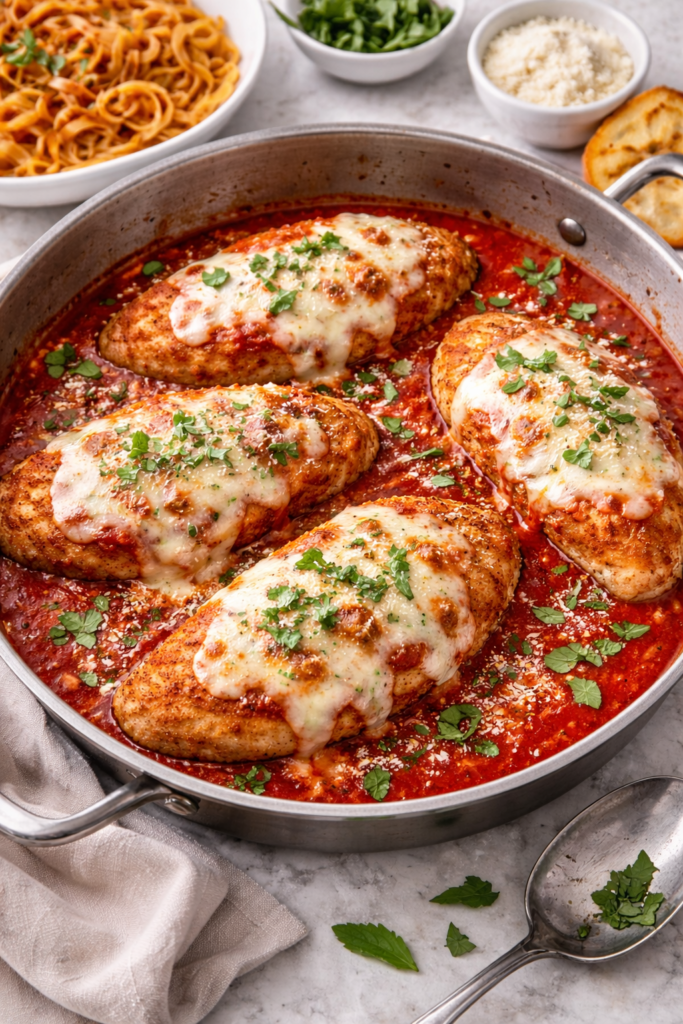
Step 1: Prep the Chicken
Place each chicken breast between two sheets of plastic wrap or parchment paper.
Use a meat mallet to pound them to an even ½ inch thickness. Start from the center and work your way out.
Season both sides lightly with salt and pepper.
Pro move: If your chicken breasts are huge, slice them in half horizontally first. You’ll get more servings and they cook faster.
Step 2: Set Up Your Breading Station
This is where organization saves you time.
Bowl 1: All-purpose flour
Bowl 2: Eggs + milk, whisked together
Bowl 3: Breadcrumbs + ½ cup Parmesan + garlic powder + Italian seasoning + salt + pepper
Line them up in order from left to right. Set up a clean plate at the end for your breaded chicken.
Step 3: Bread the Chicken
Here’s the pattern: flour → egg → breadcrumbs
Take each chicken breast and coat it completely in flour, shaking off any excess.
Dip it into the egg mixture, letting the extra drip off.
Finally, press it into the breadcrumb mixture, making sure both sides are evenly coated. Really press it in there.
Set aside and repeat with remaining chicken.
Now let it rest for 10 minutes. I know you want to skip this, but don’t!
Step 4: Heat the Oil
Pour vegetable oil into a large skillet until it’s about ¼ inch deep.
Heat over medium-high heat until the oil shimmers. You can test it by dropping in a few breadcrumbs; they should sizzle immediately.
If they just sit there, the oil isn’t hot enough. If they burn instantly, it’s too hot.
Step 5: Fry the Chicken
Carefully place 2 chicken breasts in the hot oil. Don’t overcrowd!
Cook for 4-5 minutes on the first side without moving them. This is crucial. You want a deep golden-brown crust to form.
Flip and cook for another 4-5 minutes on the second side. The internal temperature should reach 165°F.
Transfer to a paper towel-lined plate and repeat with remaining chicken.
What you should see: A gorgeous golden-brown crust that looks almost like it’s from a restaurant.
Step 6: Preheat Your Oven
While the chicken is frying, preheat your oven to 375°F.
This is also a good time to start boiling water for pasta if you’re serving it alongside.
Step 7: Assemble in the Baking Dish
Spread about ½ cup of marinara sauce on the bottom of a 9×13 inch baking dish. This prevents sticking.
Place the fried chicken breasts in a single layer. They can touch but don’t overlap them.
Spoon the remaining marinara sauce over each piece of chicken. Don’t drown it, but make sure each piece is well-covered.
Step 8: Bake
Place the dish in the oven and bake for 15 minutes.
This helps everything heat through and lets the flavors meld together. The sauce gets a little bubbly around the edges.
Step 9: Add the Cheese
Remove from the oven and top each chicken breast with a generous handful of shredded mozzarella and a sprinkle of Parmesan.
Return to the oven for 5 more minutes, or until the cheese is melted and bubbly.
Watch it carefully during these last few minutes. You want melted and gooey, not brown and crispy.
Step 10: Garnish and Serve
Let it rest for 2-3 minutes after taking it out of the oven.
Tear up some fresh basil leaves and scatter them over the top if you’re using them.
Serve immediately while everything is hot and the cheese is still stretchy.
What to Serve With Chicken Parmesan
The classic pairing is spaghetti or linguine tossed with butter, garlic, and Parmesan. Or just use more marinara sauce.
But here are some other options that work really well:
Traditional Italian Sides
🍝 Pasta (obviously)
🥖 Garlic bread (a must for soaking up sauce)
🥗 Caesar salad
🍷 A simple house salad with vinaigrette
Lighter Options
- Roasted zucchini and bell peppers
- Sautéed green beans with garlic
- Grilled asparagus
- Steamed broccoli with lemon
Comfort Food Route
- Creamy polenta
- Mashed potatoes (yes, really)
- Risotto
- Roasted potatoes with rosemary
My go-to combo: Chicken parm over spaghetti with a simple arugula salad on the side. The peppery arugula cuts through all that cheese perfectly.
Leftovers and Storage
Refrigerator Storage
Store leftover chicken parmesan in an airtight container in the fridge for up to 3-4 days.
Keep the chicken and pasta separate if you made pasta, so it doesn’t get soggy.
The breading will soften a bit in the fridge, but it’s still delicious.
Best Way to Reheat
Oven method (best): Place the chicken on a baking sheet and warm at 350°F for about 10-15 minutes. This helps maintain some of that crispy coating.
Air fryer method (second best): 350°F for 5-7 minutes. Comes out almost as crispy as fresh.
Microwave (if you must): Use 50% power and heat in 30-second intervals. It won’t be crispy, but it’ll be hot.
Freezing Instructions
Cooked chicken parmesan freezes surprisingly well.
Let it cool completely, then wrap each piece individually in plastic wrap. Place wrapped pieces in a freezer-safe container or bag.
It’ll keep for up to 3 months.
Thaw in the fridge overnight before reheating.
Creative Leftover Ideas
🥪 Chicken Parm Sandwich: Slice it up and put it on a hoagie roll with extra marinara and melted mozzarella.
🍝 Chopped Pasta: Cut it into cubes and toss with penne and extra sauce for a quick baked pasta dish.
🥗 Protein-Packed Salad: Slice it thin and put it on top of mixed greens with Italian dressing.
🍕 Pizza Topping: Chop it up and use it on homemade pizza. Trust me.
Frequently Asked Questions
Can I use chicken thighs instead of breasts?
Yes! Boneless, skinless chicken thighs work really well.
They stay juicier than breasts and have more flavor. Just adjust the cooking time; they might need an extra 2-3 minutes per side since they’re usually thicker.
Why is my breading falling off?
This usually happens for one of three reasons:
- The chicken was too wet before breading
- You skipped the resting time after breading
- You moved the chicken around too much while frying
Make sure to pat the chicken completely dry before you start, let it rest for 10 minutes after breading, and resist the urge to flip it multiple times.
Can I make this without frying?
Absolutely. Brush the breaded chicken with olive oil and bake at 400°F for 20-25 minutes, flipping halfway through.
It won’t be as crispy as the fried version, but it’s still really good and saves you a lot of calories.
What’s the best cheese to use?
Low-moisture mozzarella is your best bet.
Fresh mozzarella has too much water content and can make everything soggy. Shred it yourself instead of buying pre-shredded for better melting.
The pre-shredded stuff has anti-caking agents that can make it grainy.
How do I know when the chicken is done?
Use a meat thermometer. The internal temperature should reach 165°F.
If you don’t have a thermometer, cut into the thickest part of one piece. The meat should be white all the way through with no pink, and the juices should run clear.
Can I use store-bought sauce?
Yes, and honestly, it’s what I use most of the time.
Choose a good quality marinara that you actually like the taste of. Rao’s is my go-to, but any brand you enjoy will work.
Life’s too short to make everything from scratch when store-bought is perfectly good.
Why did my chicken come out dry?
Overcooking is usually the culprit.
Make sure your chicken breasts aren’t too thick (½ inch is ideal), and don’t fry them for too long. Also, the baking step after frying continues to cook the chicken, so factor that in.
If you’re constantly struggling with dry chicken, try switching to thighs instead.
Can I prep this ahead for a dinner party?
Yes! Bread the chicken the day before and keep it in the fridge.
About an hour before guests arrive, fry the chicken and assemble everything in the baking dish.
Pop it in the oven about 30 minutes before you want to serve. You’ll look like a total pro.
What’s the difference between chicken parmesan and chicken parmigiana?
They’re the same dish!
“Parmigiana” is the Italian name. Americans shortened it to “parmesan” and that’s what stuck. Some Italian food purists get upset about this, but honestly, delicious food is delicious food no matter what you call it.
Can kids help make this?
Definitely! The breading station is perfect for little helpers.
Just keep them away from the hot oil and oven parts. My niece loves pressing the chicken into the breadcrumbs. It’s a great way to get kids interested in cooking.
Wrapping Up
There you have it. Crispy, cheesy, absolutely delicious chicken parmesan that you can make any night of the week.
The best part about this recipe is how forgiving it is. Once you make it a few times, you’ll develop your own rhythm and it’ll become second nature.
And here’s the thing: homemade chicken parm is one of those recipes that makes you feel like you really accomplished something in the kitchen.
It looks impressive, tastes amazing, and fills your house with the best smells while it’s cooking.
The first time I made this for friends, they couldn’t believe I’d actually made it from scratch. They thought I’d ordered it and just plated it nicely. 😄
Give this recipe a try and let me know how it turns out! I’d love to hear if you tried any of the variations or if you have your own tips to share.
Drop a comment below with your experience or any questions you have.