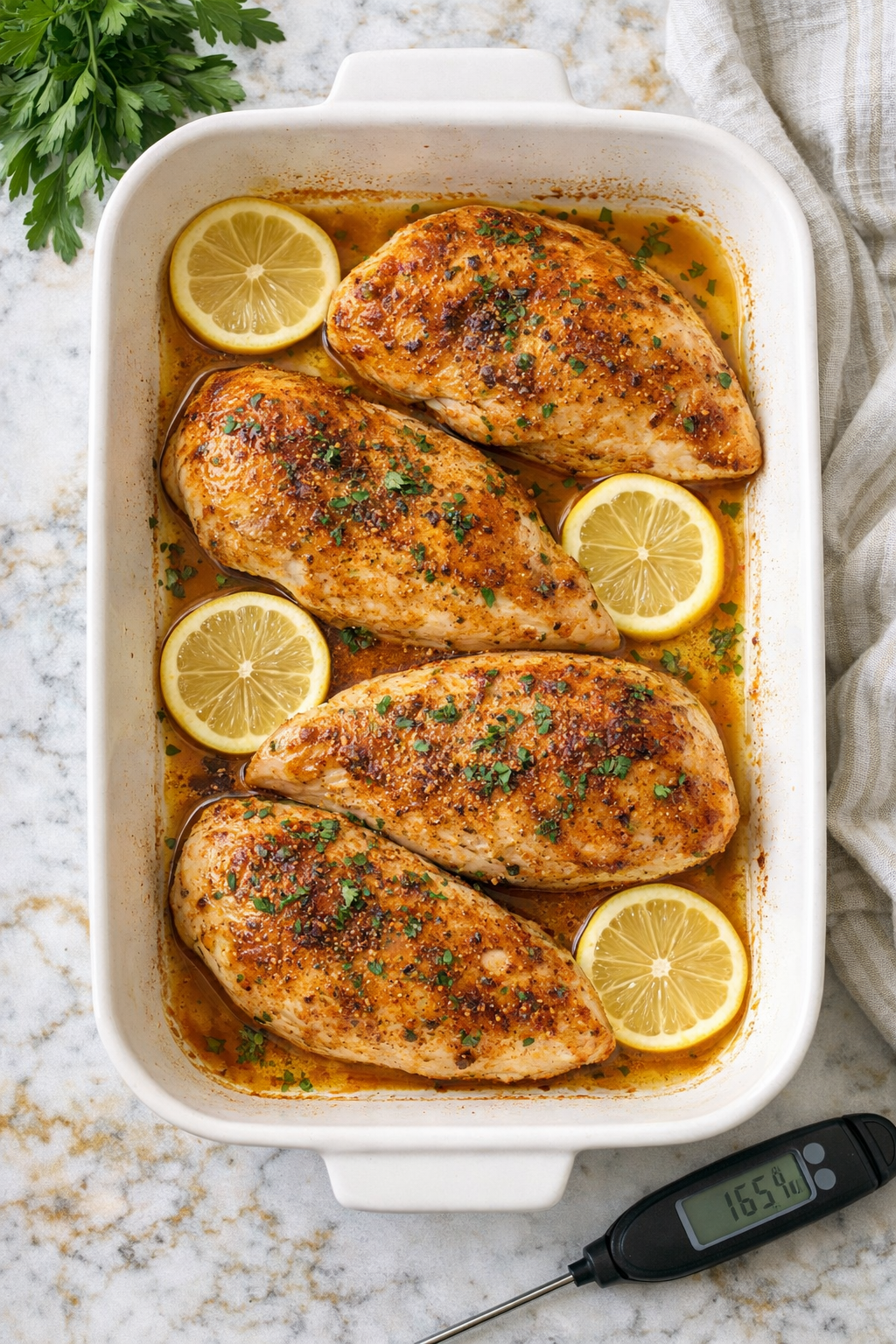
Most people have made baked chicken breast at least once. And most people have also ended up with a dry, rubbery slab that needed a river of sauce just to get through.
It doesn’t have to be that way.
With a few simple tricks, baked chicken breast goes from something you eat out of obligation to something you genuinely look forward to. And once you nail this recipe, you’ll probably make it on repeat.
It’s high protein, low effort, and honestly one of the most versatile things you can have in your fridge during the week.
What You’ll Need
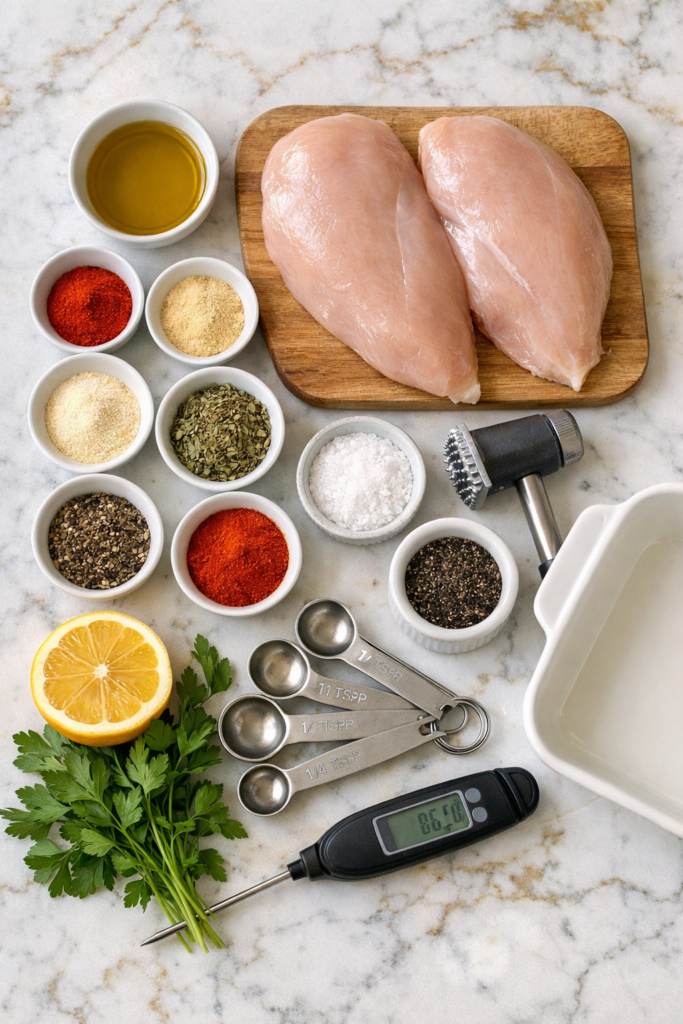
For the Chicken
- 2 large boneless, skinless chicken breasts (about 8 oz each)
- 2 tablespoons olive oil
- 1 teaspoon garlic powder
- 1 teaspoon onion powder
- 1 teaspoon smoked paprika
- 1/2 teaspoon dried oregano
- 1/2 teaspoon salt (or to taste)
- 1/4 teaspoon black pepper
- 1/4 teaspoon cayenne pepper (optional, but recommended)
- 1 tablespoon fresh lemon juice
Optional Garnish
- Fresh parsley, chopped
- Lemon slices
Tools You’ll Need
- Oven-safe baking dish or rimmed baking sheet
- Meat thermometer (non-negotiable for juicy chicken)
- Small mixing bowl
- Measuring spoons
- Plastic wrap or a zip-lock bag (for pounding chicken)
- Meat mallet or rolling pin
- Aluminum foil
- Sharp knife and cutting board
Pro Tips
These are the things that actually make the difference between dry chicken and chicken that people ask you for the recipe for.
1. Pound your chicken to an even thickness. This single step changes everything. Chicken breasts are thicker on one end, which means one side overcooks before the other is done. A quick pound to about 3/4 inch thickness fixes that completely.
2. Don’t skip the rest. Let the chicken rest for 5 minutes after it comes out of the oven. This is when the juices redistribute. Cut it too soon and they all run out onto your cutting board. A waste.
3. Use a meat thermometer. Pull the chicken at exactly 165°F (74°C). Not 170, not 180. The more you push past 165, the drier it gets. A thermometer costs about $10 and completely eliminates the guesswork.
4. Bring the chicken to room temperature first. Taking the chicken out of the fridge 15-20 minutes before cooking means it cooks more evenly. Cold chicken straight into a hot oven = uneven results.
5. Don’t cover it while it bakes. Covering traps steam and makes the exterior soft instead of slightly golden. Leave it uncovered for better texture on the outside.
How to Make Baked Chicken Breast
Step 1: Prep the Chicken
Pull the chicken out of the fridge 15-20 minutes before you plan to cook it.
Place one breast at a time between two sheets of plastic wrap (or in a zip-lock bag) and pound to an even thickness of about 3/4 inch using a meat mallet or rolling pin.
Pat both sides completely dry with paper towels. Dry chicken = better seasoning adhesion and a slightly better crust.
Step 2: Season
Preheat your oven to 425°F (220°C).
In a small bowl, mix together the garlic powder, onion powder, smoked paprika, dried oregano, salt, black pepper, and cayenne.
Rub the chicken on all sides with olive oil, then coat generously with the spice mixture. Press it in a little so it sticks well.
Squeeze fresh lemon juice over both breasts just before they go in.
Step 3: Bake
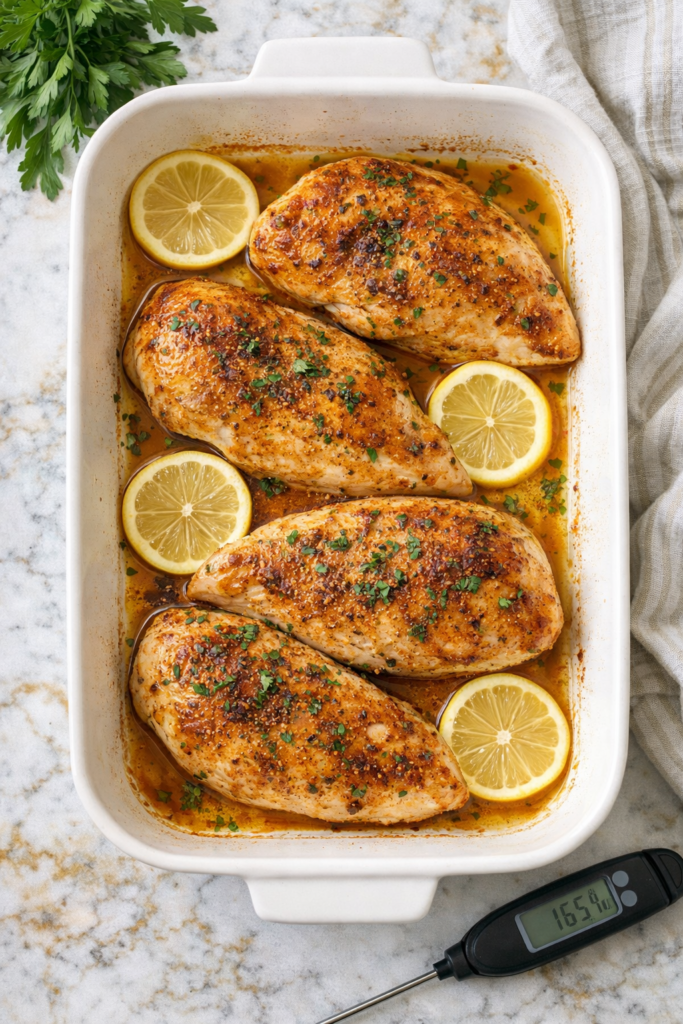
Place the chicken in a lightly greased baking dish or on a rimmed baking sheet. Make sure the breasts aren’t touching each other.
Bake at 425°F for 18-22 minutes, or until the internal temperature reads 165°F (74°C) on a meat thermometer.
The higher temperature is intentional. It creates a light golden exterior while locking moisture in, rather than slowly drying the chicken out at a lower temperature.
Step 4: Rest and Serve
Remove from the oven and let the chicken rest for 5 full minutes before slicing.
Slice against the grain, garnish with fresh parsley and a squeeze of lemon if you like, and serve.
That’s it. Genuinely that simple.
Substitutions and Variations
No smoked paprika? Regular paprika works, you just lose a little of that depth. Adding a tiny pinch of cumin helps make up for it.
Want it with a sauce? A garlic butter sauce or a simple honey mustard glaze brushed on in the last 5 minutes of baking takes it to a different level.
Prefer Italian flavors? Swap the spice mix for Italian seasoning, garlic powder, and a little parmesan pressed onto the top before baking.
Bone-in chicken breasts? Same recipe, but bake at 375°F for 35-45 minutes and check with a thermometer.
No lemon juice? A splash of white wine vinegar or even just skipping it entirely still gives you a great result.
Make Ahead Tips
Marinate overnight. You can season the chicken and store it in the fridge (covered) for up to 24 hours before baking. The flavors go deeper and it saves you time on the day of.
Batch cook. Make 4-6 breasts at once and store them for the week. Having pre-cooked chicken in the fridge makes lunches and dinners so much faster to pull together.
Nutritional Breakdown
(Per serving, based on one 8 oz chicken breast)
| Nutrient | Amount |
|---|---|
| Calories | ~290 |
| Protein | 48g |
| Fat | 9g |
| Carbohydrates | 2g |
| Sodium | ~450mg |
48 grams of protein per breast. That’s not nothing. This is one of the leanest, highest-protein meals you can make in under 30 minutes with ingredients you probably already have.
Diet Swaps
- Dairy-free: Already is.
- Low-sodium: Cut the salt in half and skip the cayenne.
- Whole30/Paleo: This recipe fits both as written.
Meal Pairing Ideas
This chicken goes with almost everything, but here are a few combinations that work really well together:
- Roasted sweet potatoes + steamed broccoli
- Garlic butter rice + a simple green salad
- Pasta with olive oil, cherry tomatoes, and fresh basil
- Cauliflower rice + roasted asparagus (great for lower carb meals)
- Sliced thin on top of a Caesar salad
Leftovers and Storage
Refrigerator: Store in an airtight container for up to 4 days. Reheat gently in the microwave with a tiny splash of water and cover it loosely so it doesn’t dry out.
Freezer: Freeze cooked chicken for up to 3 months. Slice it first so you can pull out exactly what you need without thawing the whole batch.
Quick reuse ideas:
- Dice and throw into wraps or grain bowls
- Shred and add to pasta or soup
- Slice thin for sandwiches
- Chop into salads
Frequently Asked Questions
How do I know when baked chicken breast is done without a thermometer? You can pierce the thickest part and check that the juices run clear (not pink). But a meat thermometer really is worth getting. It’s the only way to be completely sure and completely consistent every time.
Can I use frozen chicken breasts? You can, but thaw them fully in the fridge overnight first. Baking from frozen leads to uneven cooking and usually dryer results.
My chicken always comes out dry. What am I doing wrong? Almost always one of three things: overcooking it past 165°F, not pounding it to an even thickness, or skipping the rest after it comes out. Fix those three things and the results completely change.
Can I marinate it in something acidic like lemon juice for hours? Keep acidic marinades to 30 minutes max. Acids start to break down the protein in the meat and can actually make the texture mushy if left too long.
What’s the best oven temperature for baked chicken breast? 425°F is the sweet spot. It’s hot enough to get a little color on the outside while keeping the inside juicy. Lower temperatures tend to dry the chicken out as it takes longer to cook through.
Can I make this on a sheet pan with vegetables? Absolutely. Add chopped vegetables (broccoli, bell peppers, zucchini) around the chicken. Just make sure everything is cut to a similar size so it all finishes at the same time.
Wrapping Up
Baked chicken breast has a reputation it doesn’t deserve. Done right, it’s one of the most satisfying, reliable meals you can add to your weekly rotation.
Give this recipe a try and see what you think. And if you make it, leave a comment below! Tell me what you paired it with, what spice swaps you tried, or any questions you have. I read every single one and love hearing how it went.