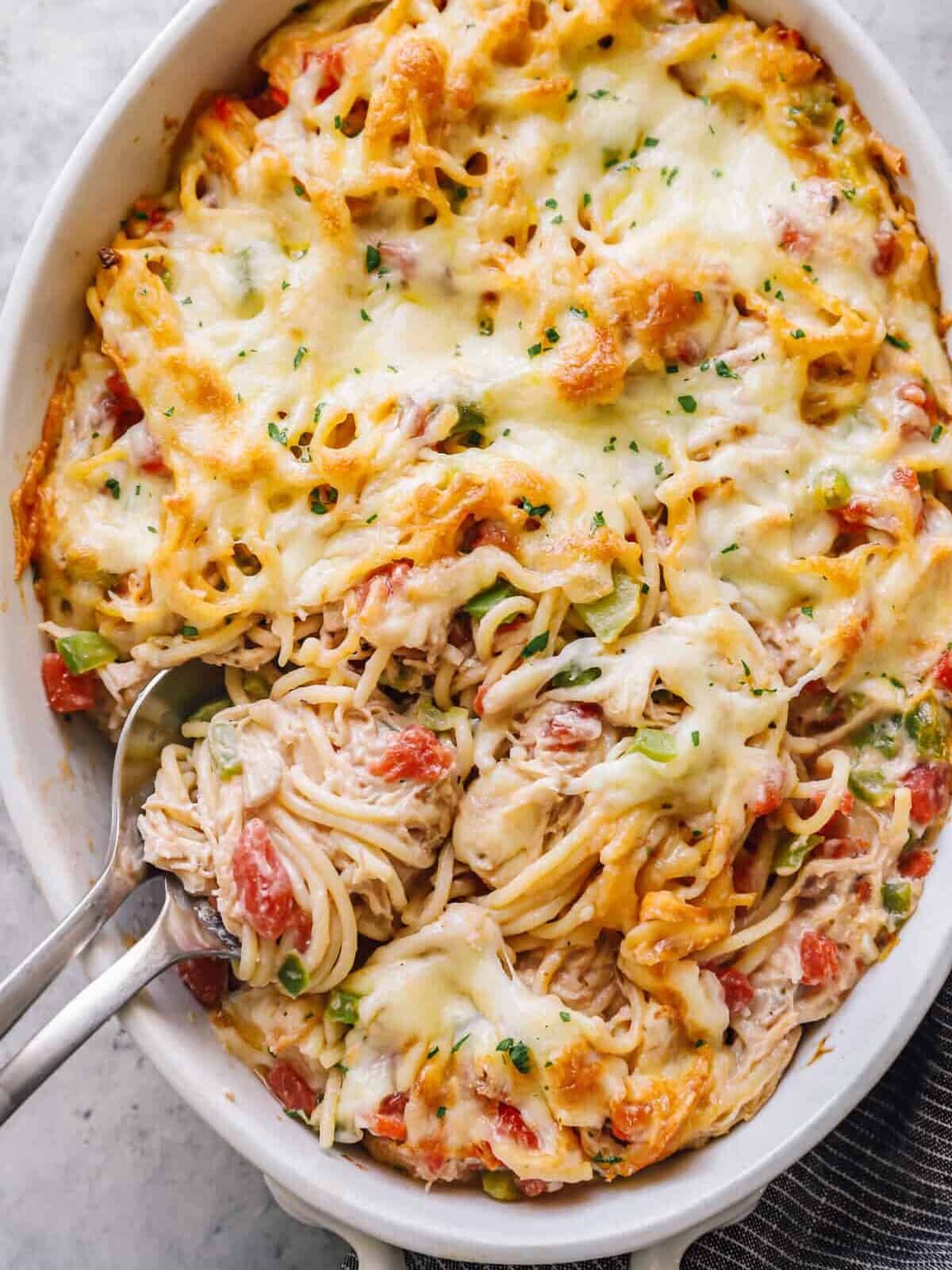
You know that feeling when you order Alfredo at a restaurant and it’s… fine? Just fine?
That stops today.
This homemade Chicken Alfredo is the kind of dish that makes people go quiet at the dinner table. Not because it’s fancy. But because it’s that good.
And once you know what goes into a real Alfredo sauce, you’ll never look at a jar of store-bought pasta sauce the same way again.
What You’ll Need
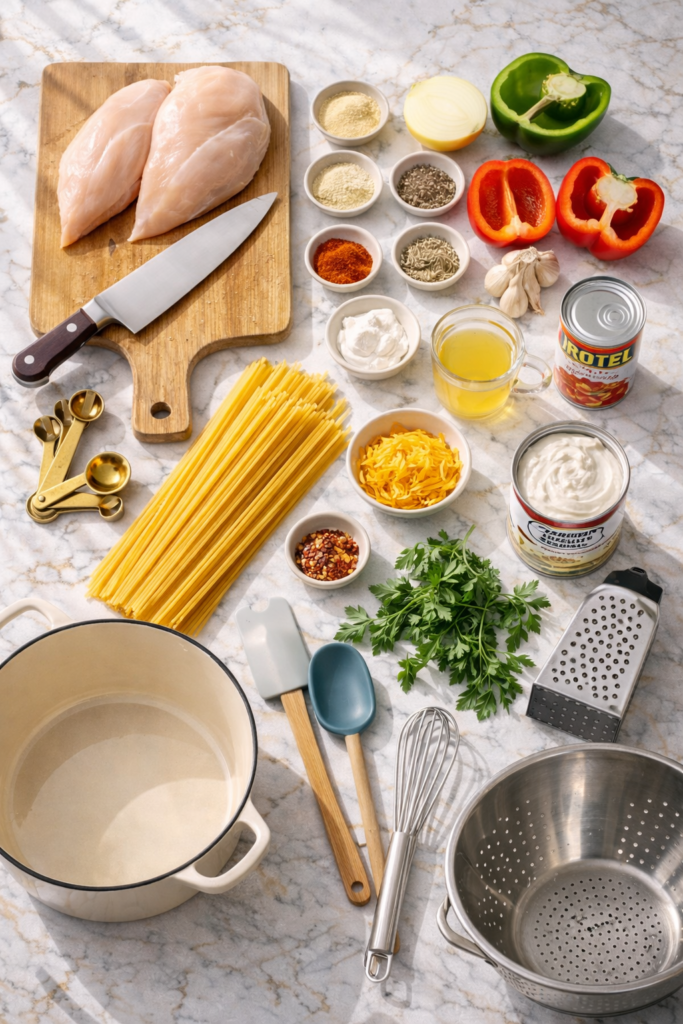
For the Chicken
- 2 large boneless, skinless chicken breasts (about 1.5 lbs)
- 1 tsp garlic powder
- 1 tsp Italian seasoning
- ½ tsp onion powder
- ½ tsp paprika
- ½ tsp salt
- ¼ tsp black pepper
- 2 tbsp olive oil
For the Alfredo Sauce
- 4 tbsp unsalted butter
- 5 cloves garlic, freshly minced
- 2 cups heavy cream (not half-and-half — this matters)
- 2 cups freshly grated Parmesan cheese (the block kind, not the green shaker)
- ½ tsp salt
- ¼ tsp black pepper
- ¼ tsp nutmeg (trust the process on this one)
For the Pasta
- 12 oz fettuccine
- 1 tbsp salt (for the pasta water)
- ½ cup reserved pasta water
Optional Garnish
- Fresh parsley, chopped
- Extra Parmesan
- Red pepper flakes
Tools You’ll Need
- Large pot (for boiling pasta)
- Large skillet or sauté pan (12-inch minimum)
- Cutting board and a sharp knife
- Box grater or microplane
- Tongs
- Ladle or measuring cup (for the pasta water)
- Colander
Pro Tips
These are the things I wish someone had told me before I made Alfredo for the first time.
- Grate your own Parmesan. Pre-shredded cheese has anti-caking agents that make the sauce grainy instead of smooth. A block of Parmesan + a box grater = a completely different result.
- Save your pasta water before you drain. The starchy water is what helps the sauce cling to the noodles. Forget this step and you’ll end up with a sad, separated sauce at the bottom of the bowl.
- Don’t boil the sauce. Keep your heat at medium-low when adding the cream and Parmesan. High heat will break the sauce and you’ll end up with a greasy, clumpy mess.
- Let the chicken rest before slicing. At least 5 minutes. This keeps all the juices inside the meat where they belong.
- Undercook your pasta by 1-2 minutes. It finishes cooking in the sauce, which means it actually absorbs the flavor instead of just sitting next to it.
How to Make It
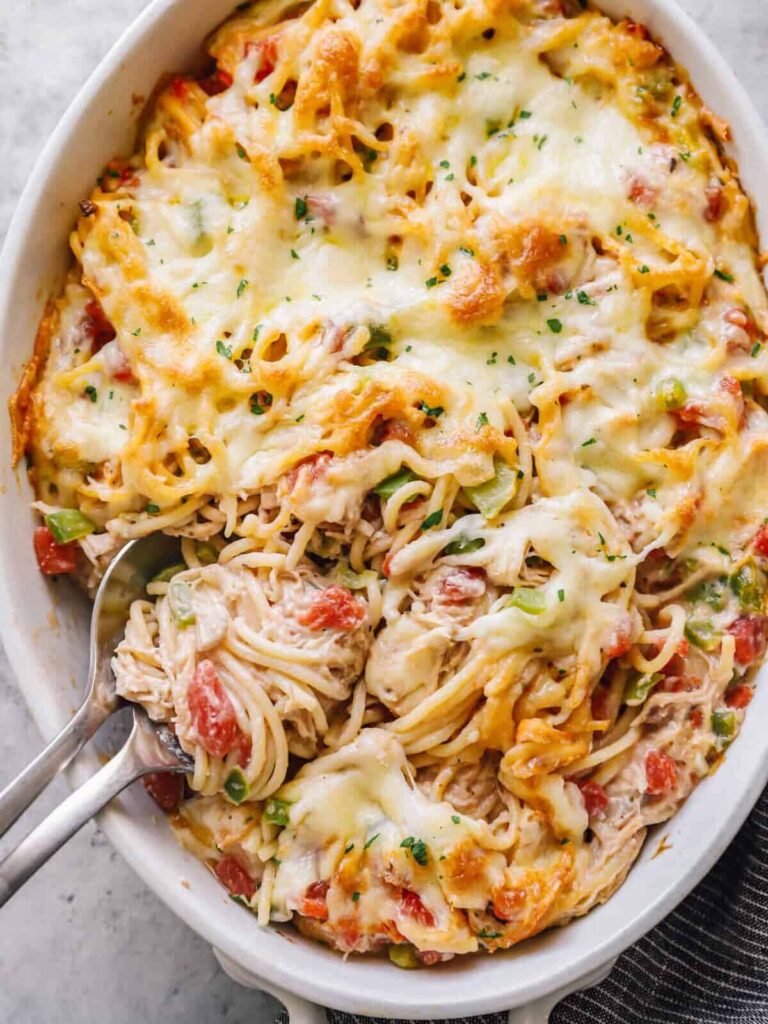
Step 1: Season and Sear the Chicken
Pat your chicken breasts dry with a paper towel. (Wet chicken = no sear. No sear = no flavor.)
Mix together the garlic powder, Italian seasoning, onion powder, paprika, salt, and pepper in a small bowl. Coat both sides of the chicken generously.
Heat olive oil in your skillet over medium-high heat. When the oil shimmers, add the chicken.
Cook for 6-7 minutes per side without moving it. You want a golden-brown crust, not a steamed, sad-looking piece of chicken.
Once done, transfer to a cutting board and let it rest for 5 minutes. Slice into thin strips.
Step 2: Cook the Fettuccine
Bring a large pot of water to a rolling boil. Add 1 tbsp of salt. (It should taste like the sea.)
Cook your fettuccine for 2 minutes less than the package directions say.
Before draining, scoop out at least 1 cup of pasta water and set it aside. Then drain the pasta.
Step 3: Make the Alfredo Sauce
In the same skillet you cooked the chicken in, melt butter over medium-low heat.
Add the minced garlic and cook for 60 seconds, stirring constantly. You want it fragrant, not golden.
Pour in the heavy cream and stir to combine. Let it come to a gentle simmer (not a boil) for about 3-4 minutes, until it thickens slightly.
Lower the heat. Add your freshly grated Parmesan in small handfuls, stirring between each addition so it melts smoothly. Add the salt, pepper, and nutmeg.
Step 4: Bring It All Together
Add the drained pasta directly into the sauce. Toss with tongs to coat every strand.
If the sauce looks too thick, add pasta water a splash at a time until it reaches that creamy, glossy consistency.
Plate your pasta, top with sliced chicken, garnish with fresh parsley and extra Parmesan if you want.
That’s it. Genuinely.
Substitutions and Variations
Not everyone’s working with the same fridge. Here’s how to make it work for your situation.
| Swap | Use Instead |
|---|---|
| Heavy cream | Whole milk + 2 tbsp flour (sauce will be lighter) |
| Fettuccine | Linguine, pappardelle, or spaghetti |
| Chicken breast | Chicken thighs (more forgiving, more flavor) |
| Parmesan | Pecorino Romano (saltier, nuttier) |
| Butter | Olive oil (not the same, but it works) |
Want to add veggies? Sautéed mushrooms, spinach, or sun-dried tomatoes all work really well here.
Prefer shrimp? Swap the chicken for large shrimp, seasoned the same way. Cook for just 2 minutes per side.
Gluten-free? Use your favorite GF pasta. The sauce itself is naturally gluten-free.
Make Ahead Tips
Honestly, Alfredo is best the moment it’s made. But life doesn’t always work that way.
- The chicken can be cooked and sliced up to 2 days ahead and stored in the fridge.
- The sauce can be made a day in advance. Store it separately in an airtight container, then reheat gently over low heat with a splash of cream or milk.
- Don’t store assembled pasta in sauce for more than a few hours. The noodles absorb everything and turn mushy.
Nutritional Breakdown
| Nutrient | Per Serving (approx.) |
|---|---|
| Calories | ~820 kcal |
| Protein | 48g |
| Carbohydrates | 55g |
| Fat | 45g |
| Saturated Fat | 25g |
| Sodium | ~780mg |
Based on 4 servings. Numbers are estimates.
This is an indulgent meal, no question. Pair it with a simple arugula salad or roasted broccoli to balance things out.
Meal Pairing Suggestions
- Salad: Simple arugula with lemon and olive oil. Nothing heavy.
- Bread: A crusty baguette or garlic bread for sauce-scooping purposes.
- Wine: A dry white like Pinot Grigio or Chardonnay pairs really well.
- Dessert: Keep it light after this. Sorbet or fresh fruit is perfect.
Leftovers and Storage
- Fridge: Store leftovers in an airtight container for up to 3 days.
- Reheating: Add a splash of cream or milk before reheating on the stovetop over low heat. Stir frequently. Avoid the microwave if you can — it tends to dry the pasta out and separate the sauce.
- Freezing: Not recommended. Cream-based sauces don’t freeze well and will separate when thawed.
FAQ
Can I use pre-grated Parmesan from a bag? Technically yes. But the sauce won’t be nearly as smooth. Pre-shredded cheese has cellulose coating to prevent clumping, which ironically makes it clump in your sauce. Just grab a block and a grater.
Why did my sauce turn out grainy? Two likely culprits: the heat was too high, or the cheese was added too fast. Lower the heat to medium-low and add Parmesan in small amounts, stirring in between.
My sauce is too thick. What do I do? Add pasta water, a tablespoon at a time, and stir until it loosens up. This is exactly what that reserved pasta water is for.
Can I make this without butter? You can use olive oil, but the sauce won’t have the same richness. Butter is what gives Alfredo its signature flavor, so use it if you can.
How do I know when the chicken is cooked through? The internal temperature should read 165°F (74°C) at the thickest part. If you don’t have a meat thermometer, cut into the thickest part and check that there’s no pink left.
Is this recipe kid-friendly? Very much so. Skip the red pepper flakes and it’s mild enough for even picky eaters. My personal experience: kids love twirling fettuccine.
Wrapping Up
Here’s the thing about Chicken Alfredo: it sounds simple. And it is. But simple done right hits different.
A real Alfredo sauce made with fresh Parmesan and heavy cream tastes nothing like the versions most of us grew up eating. And once you make it from scratch, you’ll see exactly what I mean.
This is the kind of recipe you’ll make on a random Tuesday and feel like you really did something special with your evening. No reservations required.
Give it a try this week, then drop a comment below. I want to hear how it turned out for you, any tweaks you made, and any questions that came up along the way. Your experience might be exactly what someone else needs to read before they make it themselves.