I spent years ordering chicken curry from my favorite Indian spot down the street. Every. Single. Week.
Then one rainy Tuesday, they were closed for renovations. I was devastated. No curry meant no comfort that night.
So I decided to stop relying on restaurants and figure out how to make it myself. Turns out, chicken curry is way easier than I thought. Like, embarrassingly easy.
The flavors are rich, the chicken is tender, and your kitchen will smell so good that your neighbors might start asking questions. I’m talking about that deep, aromatic curry smell that makes you want to eat everything in sight.
And here’s the thing: once you make this at home, you’ll realize you’ve been overpaying for takeout this whole time.
What You’ll Need
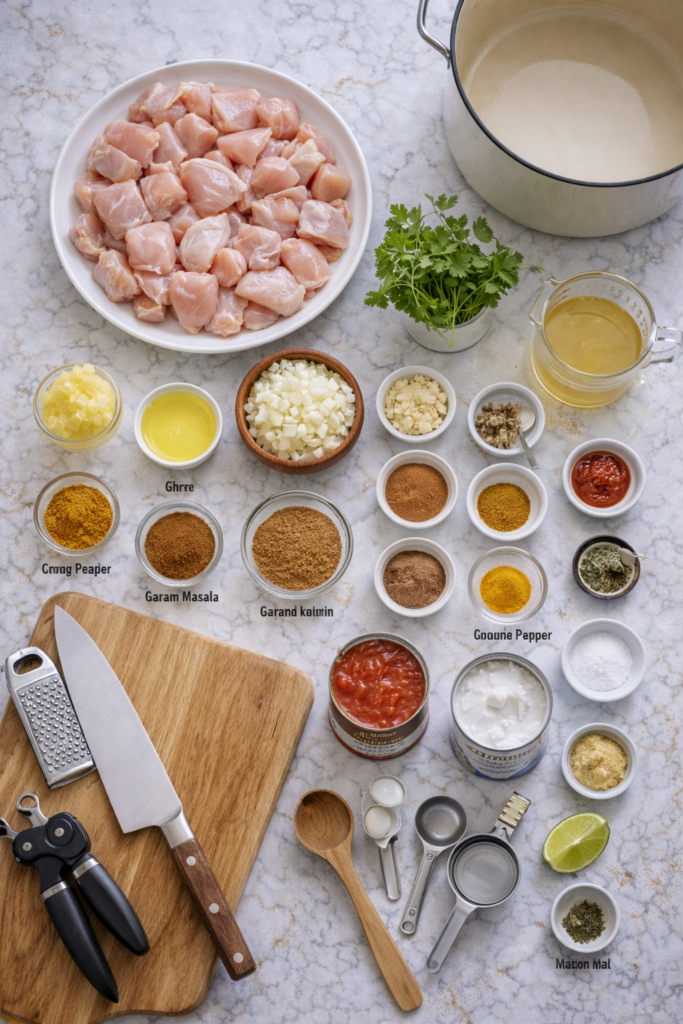
For the Curry Base:
- 2 lbs boneless, skinless chicken thighs (cut into 1.5-inch pieces)
- 3 tablespoons ghee or vegetable oil
- 1 large yellow onion (finely diced)
- 4 cloves garlic (minced)
- 2 tablespoons fresh ginger (minced or grated)
- 2 tablespoons curry powder
- 1 tablespoon garam masala
- 1 teaspoon ground cumin
- 1 teaspoon ground coriander
- 1 teaspoon turmeric powder
- 1/2 teaspoon cayenne pepper (adjust for heat preference)
- 1 can (14 oz) crushed tomatoes
- 1 can (14 oz) full-fat coconut milk
- 1 cup chicken broth
- 2 teaspoons salt (or to taste)
- 1 teaspoon sugar (balances the acidity)
- Fresh cilantro for garnish
Optional But Recommended:
- 1 tablespoon tomato paste (deepens the flavor)
- Juice of 1/2 lime (adds brightness)
- 1 teaspoon kasuri methi/dried fenugreek leaves (adds authenticity)
Pro Tips
Start with chicken thighs, not breasts. I’ve made this with both, and thighs win every time. They stay juicy and tender even if you accidentally overcook them a bit. Breasts can turn into sad, dry rubber if you’re not careful.
Toast your spices in the oil before adding liquids. This step takes maybe 30 seconds but it transforms everything. The heat releases the essential oils in the spices and makes them way more flavorful. Skip this and your curry will taste flat.
Don’t skip the sugar. I know it sounds weird to add sugar to a savory dish, but it balances the acidity from the tomatoes. Just trust me on this one. A tiny bit of sweetness makes all the flavors pop.
Let it simmer low and slow. If you rush this, the flavors won’t have time to develop. I usually let mine simmer for at least 20 minutes, sometimes longer if I have the time. The sauce will thicken and the chicken will absorb all those beautiful spices.
Use full-fat coconut milk. Light coconut milk will make your curry watery and sad. You want that creamy, rich texture that only full-fat can give you. This isn’t the time to cut calories.
Tools You’ll Need
You don’t need fancy equipment for this. Just the basics:
- Large, heavy-bottomed pot or Dutch oven
- Sharp knife and cutting board
- Measuring spoons and cups
- Wooden spoon or spatula
- Grater or microplane (for ginger)
- Can opener
How to Make It
Step 1: Prep your ingredients. Cut the chicken into chunks, dice your onion, mince the garlic and ginger. Get everything ready before you start cooking because once things heat up, it moves fast.
Step 2: Heat the ghee or oil. Put your pot over medium-high heat and add the ghee. Let it melt and get hot but not smoking.
Step 3: Brown the chicken. Working in batches so you don’t crowd the pan, add the chicken pieces. Let them get golden brown on at least two sides. This takes about 5-6 minutes. Remove and set aside.
Don’t worry if they’re not cooked through. They’ll finish cooking in the sauce later.
Step 4: Cook the aromatics. In the same pot, add your diced onion. Cook until soft and starting to brown, about 8 minutes. Add the garlic and ginger. Cook for another minute until everything smells amazing.
Step 5: Add the spices. This is where the magic happens. Add your curry powder, garam masala, cumin, coriander, turmeric, and cayenne. Stir constantly for about 30 seconds. You’ll smell the spices bloom. It’s incredible.
Step 6: Add the tomatoes and tomato paste. Stir them into the spices. Let this cook down for about 5 minutes until the tomatoes break down and the mixture thickens slightly.
Step 7: Pour in the liquids. Add the chicken broth and coconut milk. Stir to combine. Add the salt and sugar.
Step 8: Return the chicken. Put all that browned chicken back into the pot along with any juices that accumulated on the plate.
Step 9: Simmer. Bring everything to a gentle boil, then reduce heat to low. Cover and simmer for 20-25 minutes. Stir occasionally.
The sauce will thicken and the chicken will be cooked through and tender.
Step 10: Final touches. Taste and adjust the seasoning. Add more salt if needed. Squeeze in that lime juice if you’re using it. Sprinkle in the kasuri methi and stir.
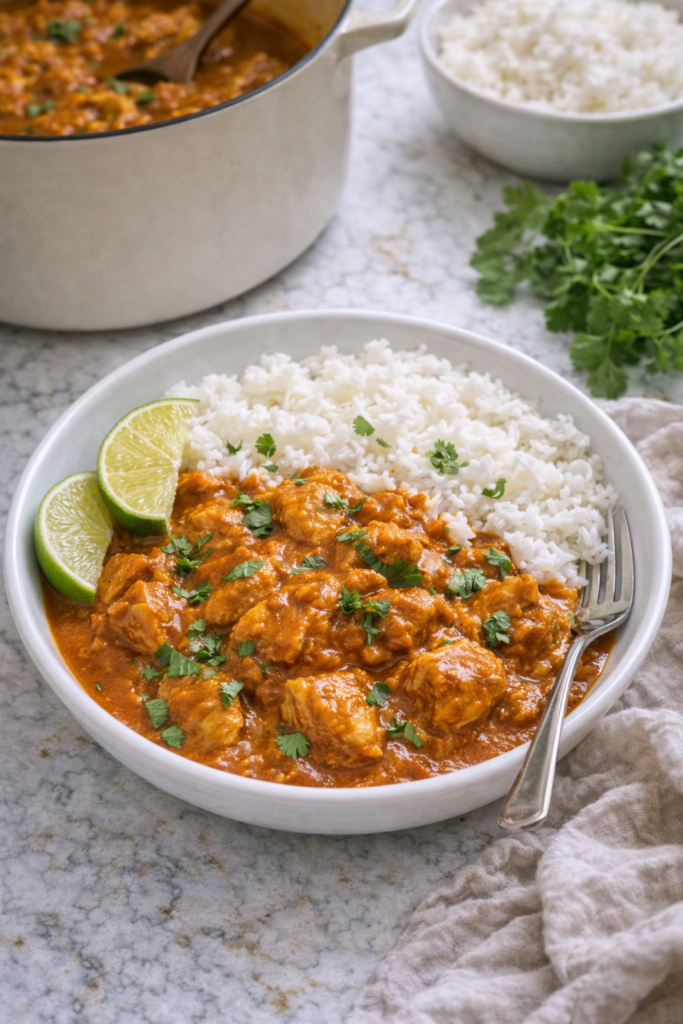
Step 11: Garnish and serve. Top with fresh cilantro. Serve over basmati rice, with naan bread, or both.
Substitutions and Variations
Protein Swaps:
- Paneer: Cut into cubes and add in the last 10 minutes of cooking
- Chickpeas: Use 2 cans, drained and rinsed (vegetarian option)
- Shrimp: Add in the last 5 minutes only (they cook fast)
- Lamb: Use boneless lamb shoulder, cut into chunks (increase cooking time to 45 minutes)
Spice Adjustments:
- Less heat: Skip the cayenne or reduce to 1/4 teaspoon
- More heat: Add 1-2 chopped green chilies with the ginger and garlic
- Can’t find garam masala: Mix equal parts cinnamon, cumin, coriander, and cardamom
Dairy-Free Alternative:
- Already dairy-free if you use oil instead of ghee
Paste Shortcut:
- Swap the individual spices for 3 tablespoons curry paste (like Patak’s)
Veggie Addition:
- Add bell peppers, cauliflower, or potatoes with the chicken
Make Ahead Tips
This curry actually tastes better the next day. The flavors have more time to meld together.
Make it up to 3 days ahead and store in the fridge. Reheat on the stove over low heat, adding a splash of water or broth if it’s too thick.
You can also freeze this for up to 3 months. Let it cool completely, then transfer to freezer-safe containers. Thaw overnight in the fridge before reheating.
If you’re meal prepping, make a double batch. Your future self will thank you when you have ready-made dinners sitting in your freezer.
Nutrition Info (Per Serving)
Based on 6 servings
- Calories: 420
- Protein: 32g
- Carbs: 12g
- Fat: 28g
- Fiber: 3g
- Sugar: 5g
Keep in mind these numbers don’t include rice or naan. Those will add extra calories and carbs.
Perfect Pairings
What to Serve With:
- Basmati rice: The classic choice (I make mine with a little butter and salt)
- Naan bread: Great for soaking up all that sauce
- Raita: Cooling yogurt sauce balances the spice
- Cauliflower rice: Lower-carb option that still works
- Simple cucumber salad: Adds freshness and crunch
Drinks:
- Mango lassi: Sweet and creamy
- Indian beer: Like Kingfisher
- Chai tea: After dinner
- White wine: Something slightly sweet like Riesling
Time Breakdown
This recipe is faster than waiting for delivery.
- Prep time: 15 minutes
- Cook time: 40 minutes
- Total time: 55 minutes
Most of that cook time is hands-off simmering while you do other things. I usually clean up the kitchen or prep my rice while the curry simmers.
Leftovers and Storage
Store leftovers in an airtight container in the fridge for up to 4 days. Honestly, I’ve had mine last 5 days with no issues, but use your judgment.
The curry will thicken as it sits in the fridge. That’s totally normal. Just add a splash of water or broth when you reheat it.
Reheat on the stovetop over medium-low heat, stirring occasionally. You can also microwave it, but the stovetop gives you more control and heats it more evenly.
Don’t reheat the same portion multiple times. Only warm up what you’re going to eat right then.
FAQ
Can I use chicken breasts instead of thighs?
You can, but I really don’t recommend it. Breasts dry out easily and don’t have the same flavor. If you must use breasts, cut them smaller and reduce the cooking time by 5 minutes.
My curry is too spicy. How do I fix it?
Add more coconut milk or a dollop of yogurt to cool it down. You can also serve it with extra rice to balance the heat. Next time, reduce the cayenne.
The sauce is too thin. How do I thicken it?
Let it simmer uncovered for an extra 10-15 minutes. The liquid will reduce and thicken naturally. You can also mash some of the chicken against the side of the pot to release its fibers into the sauce.
Can I make this in a slow cooker?
Yes! Brown the chicken and cook the onions/spices in a pan first. Then transfer everything to the slow cooker. Cook on low for 4-6 hours or high for 2-3 hours.
What’s the difference between curry powder and garam masala?
Curry powder is a blend that usually includes turmeric (which gives it that yellow color). Garam masala is a warming spice blend with cinnamon, cardamom, and cloves. You need both for the best flavor.
Is this an authentic Indian curry?
This is more of a British-Indian style curry. Authentic regional Indian curries vary widely and are often more complex. But this version is delicious and accessible for home cooks.
Can I double the recipe?
Absolutely. Just use a bigger pot. The cooking time stays the same.
My curry tastes bland. What did I do wrong?
You probably didn’t toast the spices long enough, or you need more salt. Taste as you go and adjust. Also, make sure your spices aren’t old. They lose potency over time.
Do I have to use fresh ginger and garlic?
Fresh is always better, but you can use jarred minced garlic and ginger paste in a pinch. Use the same measurements. Just know the flavor won’t be quite as bright.
Can kids eat this?
Depends on the kid. The cayenne makes it moderately spicy. For kids, leave out the cayenne completely and reduce the curry powder by half. They can always add hot sauce if they want more heat.
Wrapping Up
Making chicken curry at home isn’t complicated. You just need decent spices, good chicken, and a little patience while it simmers.
The first time I made this, I couldn’t believe how much it tasted like restaurant curry. Maybe even better because I could control exactly how spicy it was and how much sauce I wanted.
Now I make it at least twice a month. Sometimes I’ll swap in different proteins or throw in extra vegetables to clean out the fridge. It’s become one of those recipes I don’t even need to look at anymore.
Try it this week. Make it your own. Add more chili if you want. Throw in some spinach at the end. Serve it however you like.
Then come back and tell me how it went. Did you make any changes? What did you serve it with? Drop a comment below 👇
AI Image Prompt
Create a photorealistic overhead image (9:16 aspect ratio) on white marble countertops with subtle gold veining showing: 2 lbs of raw boneless, skinless chicken thighs cut into 1.5-inch pieces on a white ceramic plate, 3 tablespoons of ghee in a small glass bowl, 1 large diced yellow onion in a small wooden bowl, 4 cloves of minced garlic in a ramekin, 2 tablespoons of fresh minced ginger on a small spoon, individual small glass bowls containing 2 tablespoons curry powder, 1 tablespoon garam masala, 1 teaspoon ground cumin, 1 teaspoon ground coriander, 1 teaspoon turmeric powder, and 1/2 teaspoon cayenne pepper, one 14 oz can of crushed tomatoes, one 14 oz can of full-fat coconut milk, 1 cup of chicken broth in a glass measuring cup, a small bowl of salt, a small bowl of sugar, fresh cilantro stems in a small vase, 1 tablespoon tomato paste in a small bowl, half a lime, and optional 1 teaspoon kasuri methi in a tiny dish. Include a large heavy-bottomed pot or Dutch oven, sharp knife, cutting board, measuring spoons and cups, wooden spoon, grater, and can opener arranged naturally around the ingredients. Shot with natural window lighting from the left side creating soft shadows, captured with iPhone 15 Pro using the popular food blogger top-down composition style, shallow depth of field, warm color temperature, and professional food styling.