You know that feeling when you walk into someone’s house and it smells like dinner’s been cooking all day? That slow-cooked, rich, make-you-want-to-curl-up-with-a-bowl kind of smell?
That’s beef stew.
I’m talking about tender chunks of beef that practically fall apart when you look at them, vegetables swimming in a gravy so good you’ll want to drink it straight from the pot, and flavors that somehow get better with every bite.
This isn’t just throwing stuff in a pot and hoping for salvation. This is about building layers of flavor, taking your time, and ending up with something that tastes like you’ve been cooking for generations (even if this is your first time).
And here’s the thing: beef stew has this reputation for being complicated or time-consuming, but it’s actually one of the most forgiving recipes you’ll ever make. Mess up the timing a little? It’ll still be good. Can’t find the exact cut of meat? Swap it out. Hate carrots? Leave them out.
So grab your biggest pot and let’s make the kind of dinner that’ll have everyone asking for seconds.
What You’ll Need
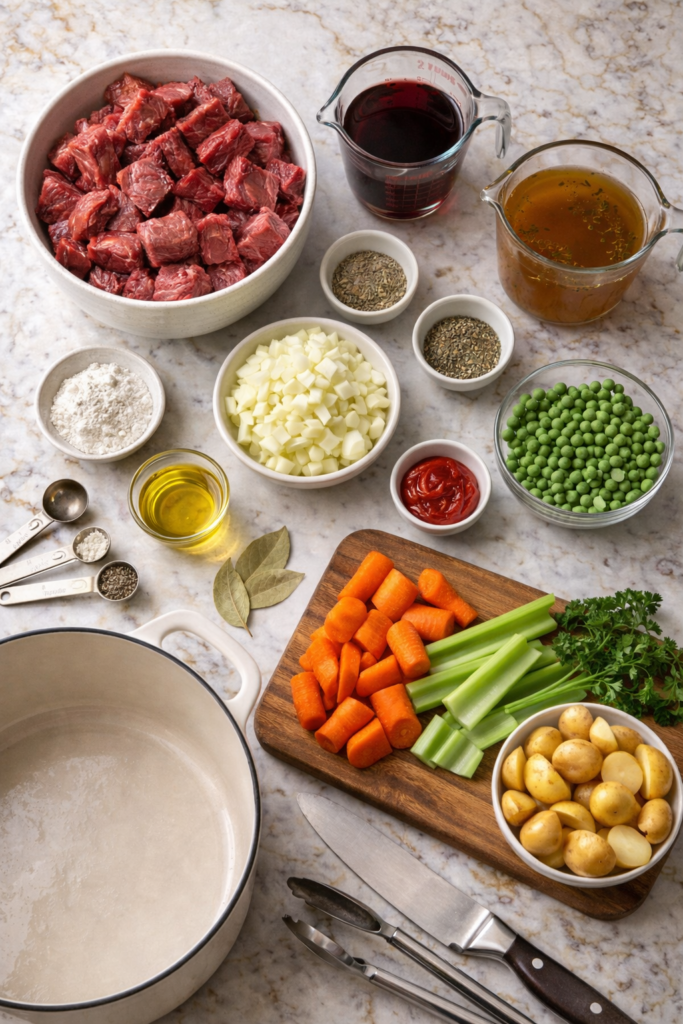
For the Stew
- 2½ pounds beef chuck roast, cut into 1½-inch cubes
- 3 tablespoons all-purpose flour
- 2 teaspoons salt
- 1 teaspoon black pepper
- 3 tablespoons olive oil
- 1 large yellow onion, diced
- 4 cloves garlic, minced
- 2 tablespoons tomato paste
- 1 cup red wine (or beef broth if you skip the wine)
- 4 cups beef broth
- 2 bay leaves
- 1 teaspoon dried thyme
- 1 teaspoon dried rosemary
- 1 pound baby potatoes, halved
- 4 large carrots, peeled and cut into 1-inch pieces
- 3 celery stalks, cut into 1-inch pieces
- 1 cup frozen peas
- 2 tablespoons fresh parsley, chopped
Tools You’ll Need
- Large Dutch oven or heavy-bottomed pot with lid
- Sharp knife
- Cutting board
- Measuring cups and spoons
- Wooden spoon
- Tongs
- Large bowl
Pro Tips
Brown in batches, not all at once. If you crowd the pot, your beef will steam instead of getting that gorgeous golden crust. Take your time here. Those crispy bits stuck to the bottom of the pot? Pure flavor gold.
Let it simmer low and slow. High heat might seem faster, but it’ll turn your beef into rubber. Keep it at a gentle bubble and let time do its thing. Your patience will be rewarded with meat so tender it melts in your mouth.
Save the peas for last. Seriously. If you add them too early, they’ll turn into sad, mushy little balls. Stir them in during the last 5 minutes and they’ll stay bright green and actually taste like peas.
Taste as you go. The flavors change as the stew cooks, so don’t just season at the beginning and call it a day. Give it a taste about 30 minutes before serving and adjust the salt and pepper.
Let it rest before serving. I know you’re hungry, but letting the stew sit for 10 minutes after cooking helps the flavors settle and the gravy thicken up even more.
How to Make Beef Stew
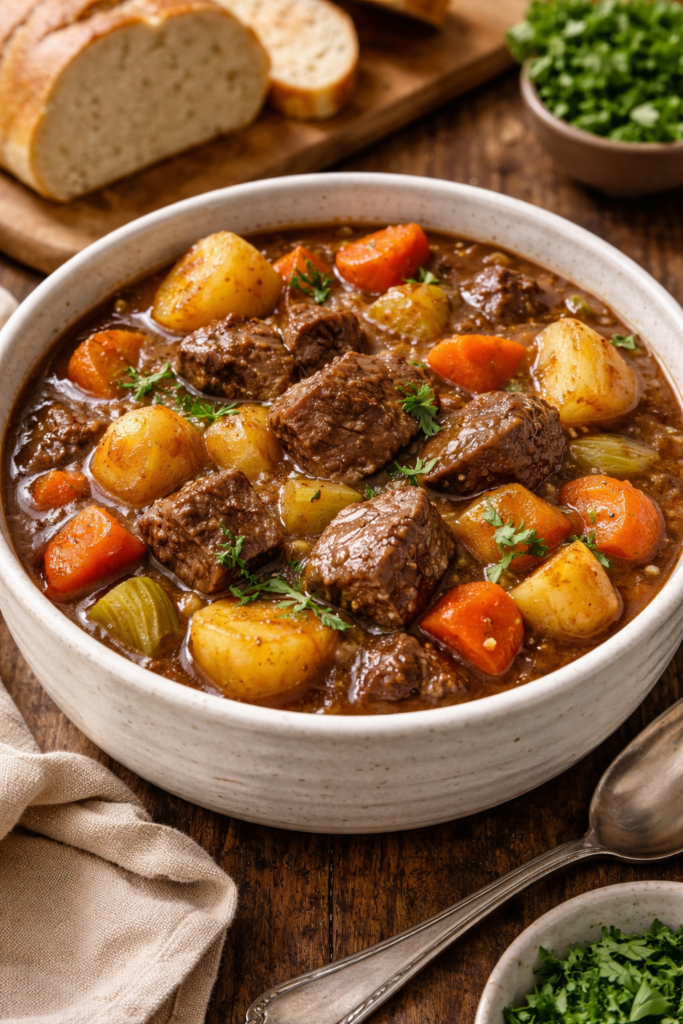
Step 1: Prep Your Beef
Pat the beef cubes dry with paper towels. This is important. Wet beef won’t brown properly.
Mix the flour, salt, and pepper in a large bowl. Toss the beef cubes in this mixture until they’re completely coated. Shake off any excess.
Step 2: Brown the Meat
Heat 2 tablespoons of olive oil in your Dutch oven over medium-high heat.
Working in batches (don’t crowd the pot), add the beef cubes in a single layer. Let them sit undisturbed for 3-4 minutes until they develop a deep brown crust. Flip and brown the other sides.
Transfer the browned beef to a plate and repeat with the remaining pieces, adding more oil if needed.
Step 3: Build the Base
Lower the heat to medium. Add the remaining tablespoon of olive oil to the pot.
Toss in the diced onion and cook for 4-5 minutes until it’s soft and starting to turn golden. Scrape up all those brown bits from the bottom of the pot while you stir.
Add the minced garlic and tomato paste. Stir constantly for about 1 minute until it smells amazing.
Step 4: Deglaze
Pour in the red wine and use your wooden spoon to scrape every last bit of stuck-on goodness from the bottom of the pot.
Let the wine bubble away for 2-3 minutes until it’s reduced by about half.
Step 5: Simmer
Return the beef to the pot along with any juices that collected on the plate.
Add the beef broth, bay leaves, thyme, and rosemary. Stir everything together.
Bring it to a boil, then immediately reduce the heat to low. Cover the pot and let it simmer gently for 1½ hours. Stir occasionally.
Step 6: Add the Vegetables
After 1½ hours, add the potatoes, carrots, and celery to the pot. Stir everything together.
Cover and continue simmering for another 45 minutes to 1 hour, until the vegetables are tender and the beef is fall-apart soft.
Step 7: Finish
Remove the bay leaves. Stir in the frozen peas and let them cook for 5 minutes.
Taste and adjust the seasoning with more salt and pepper if needed.
Let the stew rest off the heat for 10 minutes before serving. Sprinkle with fresh parsley.
Substitutions and Variations
Can’t find beef chuck? Use beef brisket or bottom round instead. Both work great for slow cooking.
No red wine? Just use extra beef broth. You can also add a splash of balsamic vinegar for depth.
Want it thicker? Mix 2 tablespoons of cornstarch with 2 tablespoons of cold water and stir it in during the last 15 minutes of cooking.
Make it spicy. Add a teaspoon of smoked paprika or a pinch of cayenne pepper with the other spices.
Swap the vegetables. Parsnips, turnips, mushrooms, or green beans all work beautifully in this stew.
Go dairy-free and it already is. This recipe doesn’t use any dairy, so you’re good to go.
Make Ahead Tips
Beef stew is actually better the next day after all the flavors have had time to hang out together.
You can make this up to 3 days ahead. Let it cool completely, then store it in an airtight container in the fridge. Reheat it slowly on the stove over low heat, stirring occasionally.
You can also freeze it for up to 3 months. Just know that potatoes can get a little grainy after freezing, so if you’re planning to freeze it, consider leaving them out and adding fresh potatoes when you reheat.
Leftovers and Storage
Store leftover stew in an airtight container in the fridge for up to 4 days.
To reheat, warm it slowly on the stove over medium-low heat. Add a splash of beef broth if it’s gotten too thick.
You can also microwave individual portions in 1-minute intervals, stirring between each, until heated through.
Frozen stew will keep for up to 3 months. Thaw it overnight in the fridge before reheating.
What to Serve With Beef Stew
Crusty bread for soaking up every drop of that gravy. Seriously, don’t skip this.
A simple green salad with a tangy vinaigrette helps cut through all that richness.
Buttery mashed potatoes if you didn’t add potatoes to your stew (or if you’re just really into carbs).
Roasted Brussels sprouts or green beans on the side add a nice crunch.
A glass of the same red wine you used in the stew pairs perfectly.
Nutritional Information
Per serving (serves 6):
- Calories: 420
- Protein: 38g
- Carbohydrates: 28g
- Fat: 16g
- Fiber: 5g
- Sugar: 6g
- Sodium: 890mg
FAQ
Can I make this in a slow cooker?
Absolutely. Brown the beef and sauté the onions and garlic on the stove first, then transfer everything to your slow cooker. Cook on low for 7-8 hours or high for 4-5 hours. Add the vegetables during the last 2 hours of cooking.
Why is my beef tough?
It needs more time. Keep simmering it low and slow until it’s tender. Beef chuck has a lot of connective tissue that breaks down beautifully with long cooking, but if you rush it, it’ll be chewy.
Can I use beef stew meat from the store?
You can, but buying a chuck roast and cutting it yourself gives you more control over the size of the pieces. Pre-cut stew meat is often made from tougher cuts or cut too small.
Do I have to use wine?
Nope. The wine adds depth and acidity, but you can absolutely skip it and use all beef broth instead. Add a tablespoon of Worcestershire sauce or balsamic vinegar if you want that extra layer of flavor.
How do I know when it’s done?
The beef should be so tender it falls apart when you press it with a fork, and the vegetables should be soft but not mushy. If you can still feel resistance when you bite into the beef, keep cooking.
Can I make this on the stovetop or does it need the oven?
Both work. The stovetop method (covered pot, low heat) is what I shared above. For the oven, after bringing it to a boil, cover the pot and stick it in a 325°F oven for the same cooking times.
Is this recipe gluten-free?
Not as written because of the flour coating on the beef. But you can easily swap it with cornstarch or a gluten-free flour blend and use gluten-free beef broth.
Wrapping Up
There’s something deeply satisfying about making a pot of beef stew from scratch. It’s the kind of meal that makes your house smell incredible, warms you up from the inside out, and somehow tastes even better as leftovers.
This recipe isn’t fussy or complicated. It’s just good, honest comfort food that’s been feeding families for generations. And now it’s yours to make your own.
So go ahead and make this on a random Tuesday. Serve it on a lazy Sunday. Bring it to a friend who needs a little comfort. Freeze half for when you don’t feel like cooking.
Drop a comment below and let me know how it turns out. Did you add your own twist? Swap in different vegetables? Make it in a slow cooker? I want to hear all about it! 🍲